

David Tarloff Hacking Death Guilty Verdict: A Miscarriage of Justice?
by Starks Shrink
In February of 2008, a brutal slaying rocked the mental health community when 39-year-old David Tarloff literally butchered psychologist Dr. Kathryn Faughey and critically injured her partner, psychiatrist Dr. Kent Shinbach, in their Manhattan office. Tarloff had a long history of mental illness and had been diagnosed by Shinbach with schizophrenia while in college 17 years earlier. At that time, Shinbach involuntarily committed Tarloff to a psychiatric hospital for treatment. According to Shinbach, he hadn’t had contact with Tarloff since that time. During that interim, Tarloff was hospitalized for his mental illness at least 20 times.
 Tarloff had lived at home with his mother for his entire life, up until about a year prior to the slaying, when she was moved into a nursing home by his brother. Tarloff’s world seemed to implode after his mother’s departure and he was arrested several times during the months leading up to him wielding the knife that took Kathryn Faughey’s life. Tarloff had been arrested a mere 10 days prior to the murder for creating a disturbance at his mother’s nursing home. Why he was released on his own recognizance is a mystery to me. He had been arrested at his father’s home the previous June, for creating a domestic disturbance, and had been ordered to undergo a mental evaluation hold when his father told police that he was “off his medication”. In a twist of irony, shortly after his arrest for Faughey’s slaying, Tarloff was deemed fit to stand trial by Manhattan psychiatrists, but less than a year later, he was deemed unfit to stand trial by Queens psychiatrists for the misdemeanor assault charges that stemmed from his arrest at the nursing home.
 Clearly, Tarloff was unstable and volatile. He believed that God had told him that his mother would be killed unless he rescued her from the hospital where she was being held. So he hatched a plan to rob $50,000 from Dr. Shinbach, kidnap his mother from the hospital, and take her to Hawaii so that he could tend to her, which would save her life. Every delusion contains seeds of truth, and Tarloff’s delusion/belief that his mother was being kept away from him likely stemmed from the fact that his brother had placed him on a list of individuals who were not allowed to see or touch his mother.
In retaliation, Tarloff took to calling the nursing home repeatedly and threatening the health care workers. His mother had to be transferred to several different facilities during the course of that year. It’s not clear, however, whether it was to protect her from her son, or for other reasons. Regardless of the actual rationale, Tarloff’s only consistent source of nurturing throughout his life was his mother and suddenly, in his mind, she had been taken from him for nefarious reasons. It’s also likely that this may have resulted in disruptions to his medication schedule. Neighbors reported having seen him wandering the neighborhood disheveled while knocking on doors asking for money.
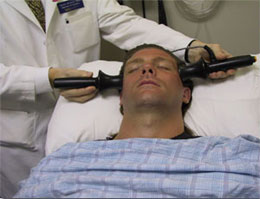 Due to the interruptions in his medication cycle, Tarloff’s hallucinations worsened which may well have contributed to his increasingly deep-rooted delusions. Why he chose Dr. Shinbach as his target is unclear, but it’s likely that he harbored a deep-seated resentment towards the psychiatrist for having diagnosed him with the debilitating illness in the first place; in his mind, he likely saw Shinbach as the source of his illness, and probably blamed him for the electroconvulsive therapy (ECT) he received during his origninal hospitalization.
 The tragedy unfolded the day Tarloff went to Shinbach’s office to carry out the robbery. Shinbach was busy with a client as was Faughey, but tragically for Kathryn, she concluded her appointment first. Tarloff entered her office and stabbed and slashed her to death. When Shinbach ran into the Kathryn’s office, alerted by her screams, he was confronted by Tarloff who first demanded money. When Shinbach didn’t hand over the sum Tarloff had anticipated, he slashed Shinbach across the face, critically wounding him.
Some of the reasons this rather unprecedented assault sent shockwaves through the mental health community are obvious, while others are far more subtle. Many therapists, psychologists and psychiatrists work out of private offices, and a surprising number work from home. Mental health professionals, contrary to popular opinion, are human and possess the same emotions, fears and foibles that are bestowed upon all of us. Much as we try, we may never know what really goes on in the mind of a client, and while personal safety is a consideration, it’s not usually at the forefront.
 Typically, one sees “ordinary” clients in an office setting that is deemed to be somewhat secure; one only sees the severely unstable and potentially violent in a secure hospital environment. Or so we think. This incident raised burning questions as to how a mental health practitioner can be protected from potential violence while maintaining an environment conducive to care. Tarloff’s assault led to panel discussions, papers, scholarly articles, studies and round table discussions at American psychological and psychiatric professional associations. Nevertheless, it’s quite unlikely that the attack could have been foreseen or prevented. Most likely, Shinbach did not even recognize Tarloff as he stepped into his office on that fateful day.
Aside from personal safety, though, what is the culpability of the mental health care provider for a violent outburst? And further, where do responsibilities lie when it comes to criminal proceedings? These are issues that are commonly addressed internally in ethics groups, within associations of practitioners, after which carefully phrased public statements are issued. Internally, however, virtually all members of the profession undoubtedly question their own morality, responsibility, and feelings of survivor’s guilt in cases such as these.
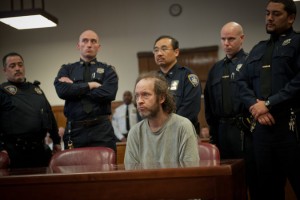
 David Tarloff was recently sentenced to life in prison without parole after being found guilty of second-degree-murder and assault. It took the state three tries to convict him; the first two attempts ended in mistrial. In a peculiar, and to my mind, unsettling twist of fate, the state’s star witness was none other than Dr. Shinbach, who recounted his encounter with Tarloff on the evening of the attacks.
Dr. Shinbach and I differ markedly as to treatment options, but far be it from me to judge a man who was so violently attacked. Shinbach testified that in the less than 10 minutes during which he was confronted by Tarloff amidst the bloody scene in Faughey’s office, with her body lying very close at hand, he was able to ascertain that the defendant was not insane, but rather was angry and had criminal intent. This is the testimony that sent Tarloff to prison for life.
 Dr. Shinbach, in this case, was the victim of grievous bodily harm and his right to testify as a victim is undeniable and compelling. However, I question that his right to testify as an attending psychiatrist with a valid opinion as to Tarloff’s mental state at the time of the attacks was correct, or even reasonable. As a human being confronted with gruesome and overwhelmingly violence, and fearing for his own life, how could he reasonably make a dispassionate psychiatric assessment that would dramatically affect the life and foreseeable future of another person? I would not want to be put in that position. I know what I think I would be compelled to do, but under the circumstances, would I be able to suspend my own human frailties while honoring the Hippocratic Oath? Undoubtedly, Tarloff was angry, afraid, and yes, he knew robbery was wrong, but felt it was the only way to save his mother, according to what God had told him. Even the judge admitted that he felt no consolation in sending Tarloff to prison for life, since the case was so tragic for all involved. If New York State had the option for the jury to decide “guilty but insane”, the verdict and sentence would probably have been quite different.
 I doubt that Tarloff will ever be in the general prison population, but his fate while in the hands of the prison system’s psychiatrists is dubious at best. He had already undergone nearly 40 rounds of electroconvulsive therapy (ECT) prior to the killing, in what I deem to be a radical last ditch effort to stabilize a severely ill man. What future horrors await David Tarloff now that he is destined to be punished, rather than treated humanely?
For mental health practitioners such as myself, our personal fear has undoubtedly been heightened by this case; perhaps in the future, we will be more likely to involuntarily commit our patients when we feel it might be necessary. The crux of the matter is the undeniable fact that protecting a client’s rights, and protecting them from themselves, is an extremely difficult task when, try as we might, we simply cannot see into their minds, a task which is made all the harder by the fact that, in many cases, they are very ill, which tends to obfuscate matters further despite everyone’s best intentions.
 Please click here to view The Starks Shrink’s Other Posts:
Skylar Neese and the Mean Girls Who Killed Her
How to Raise a Serial Killer in 10 Easy Steps
The Julie Schenecker Tragedy: Negligence, Finger-Pointing and the Death of Children
Luka Magnotta: Man, Boy or Beast?
The Disturbing Truth about Mothers Who Murder Their Children
Teleka Patrick Needed a Psychiatrist, Not a Pastor!
Rehabbing the Wounded Juvenile Will Save Their Souls (and Ours)
If you enjoyed this article, please consider sharing it!


UM…yikes! Can’t think of anything else to say except, what an awful dilemma.
Simply tragic. Amazing that people who are clearly severely mentally duisturbed are treated at trial as if they were as “normal” as you or me.
His first trial ended in a mistrial before it even began, due to Tarloff’s outbursts during jury selection (and yet they deemed him fit to stand trial?). The second ended in a hung jury – had they had the option of guilty but insane, they would have had a verdict. The law is so narrow that it makes barely any sense at all. Had he been found not guilty by reason of insanity, he still would never have walked out of a psychiatric facility but at least he would have been given care and treatment.
The vindictive folks seem to harbor the strange notion that high-security mental health hospitals are the equivalent of Club Fed. This is simply nonsense.
This is such a tragic situation. I totally disagree with Dr Shinbach who reacted as a victim and not as a professional.
Wherever Tarloff ends up, he is in already living in his own hell and trapped by his mental health condition.
It took them three times and I wonder how long they would have kept at it to finally throw him in jail.
They don’t have the resources to properly take care of such an individual but his three trials probably cost them more than it would have been necessary to keep him in a treatment centre with proper and steady care.
This is not justice but legal insanity.
This scares me in so many ways. Having being diagnosed (finally) nearly 35 years ago as Bipolar, I have been through some very unstable times. I am lucky that I had the means to keep my nose just above the waterline until I had kissed enough frogs to find a prince who could help me. The thing is, even with the means for proper diagnosis and treatment, it takes time. Lots of time and pain. (Many people do not realize that mental illness also causes physical pain.) I tried suicide more than once because I just couldn’t handle the ever-present pain.
If I had no means and no support group, I would not be alive today. I would haven dies at my own hand or died in any number of riotous behavior I acted out when I was in what I call high mania. I would be dead I know as sure as I know the sun will come up in the morning.
I have experienced what happens when they say you are sane enough to be tried and punished, but not sane enough to manage your own bank account. It’s enough to drive a sane person over the edge.
Now this article about someone without means who has his support removed, almost surgically, and ends up being just sane enough to be put in prison for life with even less hope of finding help or needed treatment and I’M SCARED.
Dichotomy enough? No. You see a perfectly sane person can be caught up in the same process. This should scare the hell out of all people/humans.
Gale, Thank you for this perceptive, yet wrenching comment. I had two cousins who were diagnosed in their late teen years as either schizophrenic or bipolar or both. They had tremendous support from their parents — both emotional and financial, yet one killed himself and the other — the bipolar one — slowly deteriorated from his meds and died at about the age of 50. Neither of them ever met with serious legal trouble though I suspect the cousin who killed himself would have had he not ended it because he was very angry.
I cannot even begin to guess at the anguish his parents went through trying to help them. They parents did found a couple of halfway houses in Northern California for mentally troubled individuals who were stable enough to take part in supervised group living. It was a wonderful thing they did and I’m certain they helped scores (perhaps hundreds) of people.
I agree about Dr. Shinbach’s testimony. He should have testified as a victim only. It’s absurd to think he could make a qualified, rational diagnosis in that 10 minutes of horror. It would only make sense that his observations and opinion would also be colored by the fact that Tarloff brutally murdered his colleague and attacked him. As tragic as Dr. Faughey’s murder is, I don’t see how putting Tarloff in a prison environment will be good for anyone. He needs to spend his life in a psychiatric ward, where trained mental health providers can keep him at least somewhat balanced.
Gale, you are to be applauded for your strength. I tell people that they are not their illnesses, they have an illness; ie, you are not bipolar or schizophrenic, rather you have bipolar disorder or you have schizophrenia. You are the same person, with the same talents, feelings and traits when the illness is managed. The public is learning, albeit slowly, that these are biological disorders and people who struggle with them should be viewed in the same way one would view a person who has any other chronic physical ailment.
We could have a very long discussion about the rights of clients and how we strive to maintain as many as possible while protecting the client from harm – both from herself and from those who would prey upon her. We may forget, especially here on this site, that the vast majority of those with mental illness become victims, not perpetrators.
That you have overcome so many hurdles and yet persevere on a daily basis is something to be celebrated as a heroic feat. I for one, applaud you Gale.
Thanks, Starks, for your perceptive and kind response to Gale. Your obvious humanity is a great thing and I applaud you (and everyone else who shares these sentiments).
Great post, Dr. Starks! I remember the Tarloff case from some years ago and I can understand why it sent shudders through the community of mental health professionals. That incident is somewhat reminscent of a shooting at the San Francisco law firm Pettit & Martin in the early 1990′s in which a former client shot and killed several employees of the firm while armed with semi-automatic weapons. The client had not had any contact with the firm for 12 years and his reason for targeting that firm was unknown. http://en.wikipedia.org/wiki/101_California_Street_shooting.
Coincidentally, I had 2-3 rounds of interviews with Pettit & Martin just before graduating from law school in 1988. I was nearly offered a position by that firm in its S.F. office, which I would’ve taken. That shooting really haunted me, as I very well could have been in that office on that tragic day in July 1993. There but for the grace of God go I. . .
Small world, Rick. I was there, 2 blocks away on the day of the shootings – 101 California, right?
That’s exactly right, Dr. Starks. It’s known as the 101 California Shooting. I heard about that tragedy while listening to the radio in my government office in LA and thanked my lucky stars that I was never offered a position with Pettit & Martin.
I was there when the sirens were blaring, people were running from the area. Frightening scene and I can imagine your relief at not having taken a post there!
Did the police barricade the streets and prevent anyone from entering or exiting the surrounding buildings?
If I recall correctly, they didn’t do a very good job. There is a plaza directly in front of the building and people were running all over in front of the building – this was after the sirens. A short time later, swat teams cordoned off the area but earlier, there was so much chaos that many could have been hurt had there been more than one shooter.