

How Politics Knock on Amanda Knox!
by Michael Mills
Although All Things Crime Blog has posted an article in which, citing his eminence grise, Professor M. Cherif Bousiouni, they suggest that Amanda Knox will not be extradited if her most recent conviction is upheld by the Court of Cassation, I personally doubt that the issue of the possible extradition of Knox is all that relevant, since it appears to me unlikely that Italy will request such extradition even if the conviction of the Nencini court is ultimately upheld.
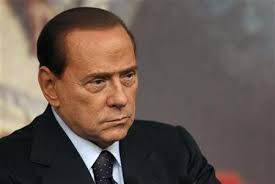
It seems that since the acquittal of Knox and Sollecito by the Hellmann court in 2011, the whole case has become politicised, a sub-plot in the ongoing attempt of the anti-Berlusconi forces to use the Italian judicial system to overthrow him and the counter-effort of the pro-Berlusconi forces to discredit that system by accusing it of bias and corruption.
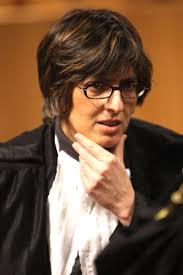
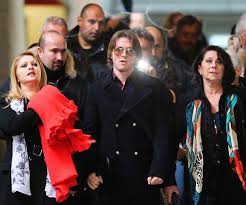 The Sollecito family is closely connected to the Berlusconi coalition through Raffaele’s aunt Sara, who is an activist for “Alleanza Nazionale”, the most right-wing Italian political party and a component of Berlusconi’s Forza Italia coalition. Furthermore, Raffaele’s main defence counsel, Giulia Bongiorno, was at the time of the the Massei court trial and during the appeal before the Hellmann court a parliamentary deputy for “Alleanza Nazionale” (she lost her seat early in 2013). Finally, Raffaele’s appeal of his conviction by the Massei court received public support from political supporters of the Berlusconi coalition.
 It may well be that anti-Berlusconi elements within the Italian judicial system saw the decision of the Hellmann court acquitting Raffaele Sollecito as a political victory for the Berlusconi supporters who had backed the appeal, and therefore as a political defeat for themselves. That might explain why the Court of Cassation so readily and completely accepted the appeal by Mignini and the Perugia judicial establishment against the judgment of the Hellmann court, even though that appeal was based solely on the same evidence that had been comprehensively discredited by Hellmann.
 It is noteworthy that the treatment of Amanda and Raffaele since the annulment of their acquittals stands in stark contrast to their treatment from the time of their arrest by the Perugia police in November 2007 until their acquittal by the Hellmann court in 2011. As the whole world knows they were kept in custody throughout the four-year period of the pre-trial before Micheli, the trial before Massei, and the appeal before Hellmann. The Court of Cassation, when it annulled the acquittals of the Hellman Court, might have ordered Amanda and Raffaele back into custody, but it decided not to do so.
 Furthermore, even though the Nencini court has re-convicted them, it has not ordered their arrest but left them at liberty, pending their final appeal to the Court of Cassation. That suggests to me that the Italian judicial system is no longer particularly interested in the personal fates of Amanda and Raffaele, no longer intent on ensuring that they serve their sentences, but is concerned only with the political imperative of preserving its reputation against the assault being mounted on it by the Berlusconi forces.
For that reason, I suspect that the Italian authorities will not try all that hard to have Amanda Knox extradited, or to pursue Raffaele if he manages to slip away somewhere. A confirmation by the Court of Cassation of the verdicts of the Nencini court will be primarily a political victory, and that is all that the anti-Berlusconi forces need; enforcement of the sentences of Amanda and Raffaele would be superfluous in this context.
Please click below to view Michael Mills’ previous posts on the Knox-Sollecito murder case:
Under Pressure: A. Knox and R. Sollecito Find Meredith Kercher’s Body
How and Why Rudy Guede Was a Lone Wolf Assailant in the Murder of Meredith Kercher
Michael Mills is a retired Australian Public Servant. He is 66 years old, has a keen interest in history and current affairs, and posts regularly on online history forums. Like many, he was appalled by the recent re-conviction of Amanda Knox and Raffaele Sollecito, and after substantial intensive research, he has developed the theory of the case that he sets forth herein.
If you enjoyed this article, please consider sharing it!


Interesting theory. However, since the present governing coalition is with the anti-Berlusconi faction, and will probably be there this time next year, no, I don’t think so.
I think this retired guy has developed a little pet theory to keep him warm in the unending, boring days that follow the end of “public service”. I don’t want to be cruel but please (a) get some self-awareness and (b) look dispassionately at the facts.
Sentimentality for the “young pretty couple” is very easy, but facts cut right through all that.
Odysseus,
Why do you see the need to make this sort of personal attack?
Can you not address the issue itself?
unlikely name one us goverment official that will sign off on it when her human rights were violated
Name the Italian Foreign Minister (without looking it up)
John Kerry. Why:
England – ally and where Meredith was from. Family will and should demand it.
Italy – ally who convicted AK of murder. Justly.
Court documents – guilty and much evidence to prove it
“Interesting theory. However, since the present governing coalition is with the anti-Berlusconi faction, and will probably be there this time next year, no, I don’t think so.”
It is not immediately clear what you are disagreeing with, Naseer.
Is it your view that the Italian Government will do all in its power to enforce the sentences against Knox and Sollecito, once they are confirmed by the Court of Cassation?
That is of course possible, but continued pursuit of Knox and Sollecito as persons is not the main aim of the anti-Berlusconi faction which, as you say, constitutes the present governing coalition in Italy and most probably will still be in power next year.
Rather, it is to defend the reputation of the Italian judicial system against the assault on it by the pro-Berlusconi forces, and thereby justify the judicial decisions that have been instrumental in bringing Berlusconi down. Since the judgement of the Hellmann court annulling the convictions of Knox and Sollecito could be seen as a vindication of the criticism of the Italian judicial system by the Pro-Berlusconi forces, especially given the close connection of the Sollecito family with those forces, it was necessary for the anti-Berlusconi forces to overthrow the Hellmann judgement.
Judge Nencini, who reinstated the convictions of Sollecito and Knox, may reasonably be regarded as aligned with the anti-Berlusconi forces since, according to an article by the journalist Andrea Vogt, he once filed a defamation complaint against Berlusconi for 2009 remarks criticizing a businessman’s conviction over illicit deals to build a high-speed rail link. Specifically, Berlusconi had called the judiciary a “metastasis” that “applied the law like Moloch” (the Canaanite god mentioned in the Bible whose ritual included human sacrifice).
It is apparent that Nencini sees a need to defend the Italian judicial system against Berlusconi’s criticisms of its integrity, and that may the essential reason why he upheld the convictions of Knox and Sollecito contrary to the judgement of the Hellmann court, which judgement could be seen as a similar criticism.
To my mind, the persecution of the Sollecito family, including the dismissal of Vanessa Sollecito, Raffaele’s brother, from the Carabinieri, cannot be explained in terms of a need to justify the actions of the local police and judicial establishment in Perugia. Rather, they are part of a much wider political struggle, in which the personal fate of Amanda Knox, and perhaps also that of Raffaele Sollecito, is irrelevant.
“To my mind, the persecution of the Sollecito family, including the dismissal of Vanessa Sollecito, Raffaele’s brother, from the Carabinieri,”
I think you will find that Vanessa was his sister!
“As the whole world knows they were kept in custody throughout the four-year period of the pre-trial before Micheli”
I think you will find that Knox was convicted for lying and sending an innocent man to prison! A sentence that she was given 4 years for and a sentence that Hellman upheld!
Come now, these are simple basic undisputed facts and you got them wrong …
“I think you will find that Knox was convicted for lying and sending an innocent man to prison! A sentence that she was given 4 years for and a sentence that Hellman upheld!”
The exact circumstances under which Knox named Lumumba as the person who raped and killed Kercher can never be known for certain because there is no known record of the interrogation she was subjected to in the early hours of 6 November 2007.
That is because the Perugia police either
1. failed to make a recording of that interrogation (which is what they claim), even though they were secretly recording the conversations between Sollecito and Knox, and their telephone calls; or
2. did make a recording, but have either misplaced it, or destroyed it, or are withholding it because it does not support their version of events.
I see no reason to doubt Knox’s version of events, namely that her police interrogators found on her mobile phone her message to Lumumba reading “certo, ci vediamo piu tarde, buona serata”, misinterpreted it as an agreement to meet him, and pressured her into agreeing to the version of events constructed by them, ie that she had gone out to meet Lumumba and had taken him back to 7 Via della Pergola, where he had sexual contact with Kercher and then killed her.
It is obvious that the police interrogators constructed that version of events to be consistent with the statement they had just coerced from Sollecito, namely that Knox had left his apartment on the evening of 7 November and had not returned until 01:00 on the next morning, 8 November.
That striving for consistency is shown by one item in the first statement composed by the police in Italian and signed by Knox at 01:45 on 6 November, namely that after receiving the message from Lumumba that she did not need to go to work, she told Sollecito that she was going off to work as normal, but instead went to meet Lumumba at Piazza Grimana and then took him to 7 Via della Pergola.
It is apparent that prior to interrogating Sollecito and Knox separately, the police had constructed a scenario whereby Knox had deceived Sollecito into thinking that she was absent from his apartment because she had gone to work as normal, whereas in fact she had gone to meet Lumumba.
In that respect, the timings given by Sollecito in the statement extracted from him by his police interrogators are crucial. On Thursdays, Knox normally worked at Lumumba’s bar “Le Chic” from about 22:00 until 01:00 the following morning. Accordingly, the time given by Sollecito for Knox’s alleged return to his apartment, about 01:00 on Friday 8 November, was consistent with the time she would have returned if she had gone to work as normal.
The content of the statements given by Sollecito and Knox on 6 November suggest that at that stage the police were not considering the former as a suspect in the killing but only Knox, and that the reason they suspected Knox was that she had a key to 7 Via della Pergola and therefore could have admitted the killer.
Accordingly, the police were trying to find evidence of a communication between Knox and another person who could be the killer, and when they found her message to Lumumba, they immediately concluded that they had found that communication, and that the person she had sent the message to must be the killer.
Another important factor is that if Knox spent the night of 7-8 November at Sollecito’s apartment as she claimed (and which would have been consistent with her normal behaviour, given that since meeting Sollecito on 25 October she had spent every night at his apartment so that she and he could enjoy sexual relations in privacy without disturbing or annoying the other residents of 7 Via della Pergola), she could not possibly have known where Lumumba was on that night.
After all, Lumumba had done something unexpected on the evening of 7 November; he had sent her a message just before 20:30 telling her not to come into work. Accordingly, after Knox received that message she could not have known where Lumumba was, whether he was in his bar or somewhere else. For all she knew, he might well have gone to 7 Via della Pergola.
Thus, when the police interrogators suggested to Knox that Lumumba had gone to 7 Via della Pergola after telling her not to come into work, she had no way of knowing that he had not done so, and therefore had no basis on which to deny their claim that he had gone there and killed Kercher. In fact, that claim might have appeared plausible to her.
Of course, if Knox had not left Sollecito’s apartment, had not met Lumumba in Piazza Grimana, had not taken him to 7 Via della Pergola and had not heard him killing Kercher, then she would have had no memory of doing any of those things (and that of course is what she initially claimed). However, the police interrogators used psychological pressure techniques, insisting that she had lost her memory of those events due to the trauma of having witnessed a brutal murder, and pressured her into “recovering” those alleged lost memories by imagining what she would have witnessed if she had theoretically been present while that murder was being committed.
In that way, the interrogators succeeded in implanting a false memory in Knox’s mind, even if only temporarily, something that experimental psychology has shown is relatively easy to do, particularly on a vulnerable person such as Knox was on that occasion. On the basis of those false memories, the interrogators were able to construct a scenario of Knox’s meeting Lumumba, taking him to 7 Via della Pergola and cowering in the kitchen while he murdered Kercher, and then get Knox to endorse it by signing the statement at 04:45 on 6 November, all of which was done without Knox having legal representation present to protect her interests.
So the fact is that Knox did not accuse a man she knew to be innocent, since she did not know where he had been on the night of 7-8 November and therefore could not be certain that he had not committed the murder. All she did was to surrender to the insistence by the police interrogators that Lumumba had gone to 7 Via della Pergola and killed Kercher there.
Furthermore, Knox cannot in any way be held responsible for the actions by the police after she had signed the two statements at 01:45 and 04:45 implicating Lumumba. It was Monica Napoleoni who made the decision to arrest Lumumba immediately, contrary to the advice of her immediate Superior, Chiacchiera, who suggested that rather than arresting Sollecito, Knox and Lumumba immediately, the police should keep them under observation for the purpose of gathering more conclusive evidence of collusion between them.
If Chiacchiera’s advice had been followed, then it is unlikely that any of the three would have been arrested and tried, since the progressive collection of forensic evidence would have revealed Guede as the sole person present in Kercher’s room during and after her murder. Unfortunately, that sound advice was not followed, most probably because Napoleoni wanted to make a name for herself as the person who had solved a brutal murder that had shocked Perugia.
Dirty deeds done dirt cheap!
I don’t get that “evidence was so comprehensively discredited by Hellmann”, since IMO and that of the Supreme Court, it is Hellmann’s reasoning that was so soundly discredited by the Supreme Court, Michael.
Since the ‘whole world’ knows that Knox and Sollecito were convicted in the first place, I am sure most people are quite content to let the process run its course.
The Supreme Court, could not have ordered the two back into custody, since Knox had already left the country; why issue an unenforceable order?
As to Vanessa Sollecito, she was fired for a)being as entitled and tone deaf as her brother and b) being caught on tape trying to derail the investigation.
So maybe, it isn’t about politics any more, but justice? Berlusconi’s lost, so there’s no need for the judiciary to assert itself. The Italian foreign minister will forward a request from the justice minister to his counterpart in Washington. After that, we shall see.
Naseer Ahmad, you wrote:
“As to Vanessa Sollecito, she was fired for a)being as entitled and tone deaf as her brother and b) being caught on tape trying to derail the investigation.”
Re (a): How are being “entitled” and “tone deaf” reasons for dismissal from the Carabinieri?
Re (b): Could you please give more precise details for Vanessa’s alleged attempt to derail the investigation.
What exactly did she do? When did she do it? What exactly is contained on the alleged tape? Where is the alleged tape held? Have its contents been released? Are they the subject of any judicial action?
I would be interested to know the source of your allegation, as I have not seen it anywhere else.
You’ve read the books and reports in which verbatim quotes from the tapes have been published, Michael, so asking me for sources and links is time wasting, which I’ll politely decline, thank you. If the carabinieri wants to fire her, do you have any evidence to say it was unwarranted?
And since you admit to a lack of knowledge what happened to Amanda Knox in the interview, get back to me when you find out.
“The exact circumstances under which Knox named Lumumba as the person who raped and killed Kercher can never be known for certain because there is no known record of the interrogation she was subjected to in the early hours of 6 November 2007.”
I will tell you what we know for absolute sure. He was arrested on her say so, something she chose not to withdraw, she willingly let him sit in prison for two weeks until a concrete alibi proved she was lying… Seriously come on, why would you even dispute this. Why do you refuse to accept this?.. I repeat she accused an innocent man and let him sit in prison for 2 weeks and said NOTHING now why was that do you suppose?
Because she is a liar, She stands convicted of lying FACT! Hellman agreed that she had lied, FACT. Hellman gave her a 3 year sentence for lying FACT. Yet you will continue to spout PR fed BS even when faced with the facts!
A PR company is employed to sway public opinion if you are too gullible to see that then there is no hope, it is pointless even trying to get you to be more objective and look at the actual evidence, of which there is a huge amount. But here is another fact for you, She will be convicted a third time and one way or another she will ultimately pay for her despicable actions that night. Defending a murderer makes you no better than the lying, manipulative, narcissistic, sociopath that she is..
Pahahaha I wish I had read you post in full, seriously!
” Accordingly, the time given by Sollecito for Knox’s alleged return to his apartment, about 01:00 on Friday 8 November, was consistent with the time she would have returned if she had gone to work as normal”
“Another important factor is that if Knox spent the night of 7-8 November at Sollecito’s apartment as she claimed”
“It is obvious that the police interrogators constructed that version of events to be consistent with the statement they had just coerced from Sollecito, namely that Knox had left his apartment on the evening of 7 November and had not returned until 01:00 on the next morning, 8 November.”
“After all, Lumumba had done something unexpected on the evening of 7 November; he had sent her a message just before 20:30 telling her not to come into work.”
“So the fact is that Knox did not accuse a man she knew to be innocent, since she did not know where he had been on the night of 7-8 November and therefore could not be certain that he had not committed the murder.”
Do you actually know anything about this case? Because you have consistently and repeatedly got the dates completely wrong, by your own words you have AK and RS giving statements 2 days before anything happened.. On that alone nothing that you say could be taken with any hint of being factually correct!
Michael – You have set forth an interesting thesis that the origin of the acquittal and subsequent re-conviction of Knox and Sollecito was political. However, the mere fact that people within Sollecito’s orbit are pro-Berlusconi doesn’t establish causation for the Hellman Court’s acquittal of AK & RS.
While Berlusconi obviously doesn’t see eye-to-eye with the Italian judiciary, probably because it sought to curb his authoritarian and fascistic tendencies, that does not mean that his minions would have gotten “down in the weeds” by intervening in a murder trial in an attempt to discredit the Massei Court. While many judges are just “politicians in robes” when it comes to deciding vital issues involving economic issues, campaign financing, and the like (i.e., U.S. Supreme Court Justices Roberts, Scalia, Kennedy, Thomas, and Alito), I seriously doubt whether high-level jurists would allow their political proclivities to affect the outcome of an appeal of a common murder trial.
Hellmann himself voiced the opinion that the judgement of his court upholding the appeal of Sollecito and Knox was overturned by the Court of Cassation for political reasons.
An article by Doug Longhini in CBS News, 7 February this year, with the headline “Was Amanda Knox a political pawn in Italian politic?”, contains this statement:
“In April 2013, the Italian Supreme Court threw out judge Claudio Hellmann’s 2011 acquittal of Knox and Sollecito. Now retired, Hellmann told La Stampa newspaper that he “foresaw” the reversal. Hellman said “the party of the prosecutor is very strong in the judiciary” and that political party had “influenced” the Italian Supreme Court, according to La Stampa.
Though Hellmann did not name the political party, it wasn’t the party of Berlusconi, Girlanda, and Bongiorno. Was it prosecutors pushing back against Berlusconi and his crew?
This wasn’t the first time Claudio Hellmann raised the possibility that political considerations were helping drive the pursuit of Knox and Sollecito. In October 2011, he told La Nazione newspaper that there was “a political background” to the case. It was directed squarely at Amanda Knox. Hellmann said, “Many wanted Amanda in prison because she was an American.” ”
Earlier in that article, Longhini gave this background to the allegations of politicisation:
“Girlanda was a member of the Italian Parliament from Perugia. His political party was the PdL (Popolo della Libertà) which was also the party of then Italian Prime Minister, Silvio Berlusconi. Girlanda and ten other members of Parliament signed a letter asking Italy’s president to investigate the Knox-Sollecito prosecutors. In addition, Raffaelle Sollecito’s lawyer, Giulia Bongiorno, was also in Parliament, head of its Judiciary Committee, and a member of Berlusconi’s political party.
For his part, Berlusconi and his party were at war with Italy’s prosecutors and judges. The Prime Minister was trying to reign in their investigative powers. Prosecutors, for their part, were trying to put Berlusconi in jail.”
So it appears that political supporters of Berlusconi did try to discredit the court that initially convicted Sollecito and Knox.
As to the reasons for that intervention, it may have been that Girlanda and the other members of parliament who signed the petition were doing a favour for Sollecito’s family, which had connections to the Belusconi coalition. But a more likely reason is that by discrediting the court that had convicted Sollecito and Knox, the supporters of Berlusconi were hoping to achieve a wider discrediting of the whole Italian judicial system, and thereby a discrediting of the court decisions that had brought Berlusconi down.
Michael – You are much more well-versed on Italian politics than I am. I am generally aware of the war between Berlusconi and the Italian judiciary, which had been trying for years to prosecute him for his crooked business dealings but which kept getting deferred due to Berlusconi’s status as head of state.
[…] How Politics Knock on Amanda Knox! […]
An interesting a concise political perspective, and given the paradoxically superficial yet highly corrupt shenanigans of Italian politics, it may have some merit. It is notable that in Italy the superficial “face” of things so often supersedes any entertained consideration of how people might view glaring or even ridiculous inconsistencies, such as not following through on such an intensely fought effort to frame the vulnerable in order to preserve reputations and avoid an international scandal around negligence.
It is also somewhat ironic that the pro-Berlusconi forces should have been so supportive of the acquittal when it is greatly as a result of the strategic, exploitative use of Berlusconi’s sleazy sensationalist media empire that this small-town story of police and judicial incompetence, Neanderthal thinking, intimidation, psychological and physical truth-suppression, greed and corruption has been suppressed in favour of an idiotic and laughable – if it weren’t so disgustingly immoral – crock of myths and lies.
Living proof that politics suck. At least when they’re mixed with what we call “justice”. If the conviction is upheld, the Italian Judicial System will lose all their credibility (what is left of it).