

Poor Little Rich Boy, You’d Better Beware!
by Pitchforks
Speaking about the case of “privileged rich kid” Ethan Couch, the 16-year-old who was sentenced last week to a few months of alcohol rehabilitation in a luxury addiction facility and ten years of probation for drunken driving that resulted in his ploughing into and killing four people, Ashleigh Banfield, in her late morning CNN show Legal View said:
“When publicity strikes, strange things can happen.”
What she seems to have meant by this statement was that if the media and public join in unified protest, decisions can be reversed, or failing that, disincentives established to prevent similar decisions being made in the future.
 Banfield’s moment of rhetoric before a commercial break was more an unfortunate reflection of this anchor’s occasionally head-rearing contamination by the prejudicial and distorting values of CNN’s sister network, HLN, than it was a profound reflection on the part of this generally intelligent and thoughtful journalist. The media have pounced on this story with all the usual predictable pandering to hot-button issues such as race and comparative socio-economic circumstances. How “privileged” a child is whose parents abandon him to his own devices and provide him with all the self-and-other-destructive means with which to wreak havoc is open to conjecture, but Banfield and most of her media colleagues have missed the point, one that is touched upon but not given time for elaboration by her guest. and frequent CNN commentator, Philadelphia attorney, Danny Cevallos.
Cevallos sums it up thus:
“The juvenile system is designed to treat, rehabilitate and supervise juvenile offenders, so it anticipates that even for crimes like this someone could get probation.”
 Unfortunately, Cevallos is talking ideally, and were he given more time to expand he would no doubt affirm that too often the juvenile justice system fails to fulfill those principles, and rather throws children and adolescents into a criminal justice cesspool where the line between what is appropriate and constructive for minors, and what is right and just for adults is severely and reprehensibly blurred. Indeed, Cevallos goes on to express consternation that Texas even has such strict sentencing regimes for juveniles that it is possible for a juvenile to end up serving twenty years in an adult facility for intoxicated manslaughter. The system that operates in some states, under which a juvenile would serve the first years of a sentence in a juvenile facility then be transferred to adult prison on reaching the age of majority, is a mere token nod to the child’s status when the crime was committed, and in no way truly evaluates, recognizes or treats the juvenile context in which the crime was committed. What is the point of attempting to rehabilitate a child for two or three years, and then throwing him into a setting where any progress he might have made while still a minor would then be completely undone, and furthermore, risk being transformed into something destructive and perverting. Far be it from suggesting that the American system of adult justice is even constructive for adults or society, there needs, at least, to be different continuance programmes for young adults who were minors at the time of their crime, so that the fact of their having been minors is addressed in a meaningful way that fully optimizes their potential and malleability for change.
 New York attorney and CNN legal analyst Paul Callan, arguing with Cevallos, says that the “cure” for “affluenza” is poverty, and in some respects he is right, but not as he then goes on to describe such “poverty”, in terms of an inhuman adult prison environment. There are plenty of juvenile facilities that are extremely spartan in their physical structure and rigorous in terms of the discipline and expectations that they impose on their young charges. Such a materially-deprived environment would certainly have been punishing for Ethan Couch, while he underwent attitudinal and behavioural rehabilitation. Though there is validity to the defense psychologist Dick Miller’s belief that subjecting children to a purely punitive rather than therapeutic and rehabilitative regime can only be destructive for society, as well as for the juvenile concerned, it is curious why he did not recommend, and the judge did not insist on a lengthy term in such a facility instead of the resort-style placement that Couch’s parents are able to afford.
 There have been reports that the same judge, Jean Boyd, sentenced an African American 14-year-old to ten years in a juvenile detention centre after he punched a man in the face, causing his death from head injury
when he fell to the ground. Because of “sealed records”, a supposed requirement in juvenile cases, the socio-economic circumstances of the 14-year-old are unknown, so it is futile to try to make specific comparisons between that and this case. Yes, African American youth tend to receive tougher sentences than their non-African American counterparts, but the circumstances and actions of that crime were completely different to Ethan Couch’s, so it is not an adequate control case against which to determine whether race was a dependent variable in either case. Consequently, to try to use it as a
case in point is gratuitous.
Certainly the full exposure of the identity and physical appearance of Ethan Couch in repeated video footage is a violation of the ostensible “protection” of privacy that is supposed to operate with respect to juveniles. The consequences for this apparently deeply disturbed and morally undeveloped young man should not have been complicated and interfered with by full public revelation. The case could just as easily have been discussed without subjecting him to the now inevitable media and public harassment whenever he appears again on the street. We should be outraged that adolescent mental health services and the juvenile justice system did not intervene conscientiously with this wholly inadequately raised, ill-equipped and addicted youth at an earlier stage, in order to help him adjust the course of his spiraling trajectory and protect his future victims. Pussy-footing around with him now, after the fact, only serves to make great news headlines at his expense, and arouse misguided and unconstructive public outrage.
 Unfortunately, as anyone who has tried to obtain mental health or drug and alcohol services for an adolescent knows, health insurance does not necessarily provide easy access to effective intervention programmes, or coverage for extended periods. It is a sad fact that many insurance policies severely limit the time a person can spend in residential treatment – essential for ingrained addiction – leaving the addict
vulnerable to relapse after only fleeting intervention. Ethan Couch probably could not have got more than a month of continuous care under insurance coverage. Even policies that allow for longer stays require a huge, up-front deductible. Some facilities will certainly admit patients who are able to pay out of pocket for longer terms – those luxury, pampering resorts with exorbitant costs that are part of a lucrative and exploitative drug and alcohol “rehab” industry. The only sure way to get a significant and continuous period of time in rehab, if one is not eligible for Medicaid, is to pay for it, so the judge’s sentence was perhaps influenced by insurance logistics and availability. By paying for private treatment the Couch family is at least leaving open a valuable space for another less financially advantaged youth in a more modest, publicly-funded facility.
Paul Callan says that the judge’s sentence for Ethan Couch sends the wrong message, that if you happen to have money and can afford a good defense lawyer and psychologist you can get a lenient sentence. But, as is most of the debate around this kid’s case, the focus of his argument is in completely the wrong direction. Everyone is up in arms because a “rich kid” is getting special treatment and at the same time the predominant desire seems to be that he should be subjected to a severe, adult consequence. What people should be outraged about is the exact opposite – that any minor, whatever his racial or socio-economic background, should be sentenced as an adult and consigned to the kind of harsh and often inhumane and dangerous conditions in which adults are incarcerated.
Before this case hit the media, the voices crying out in outrage about the number of juveniles charged, tried and convicted as adults were limited to a few 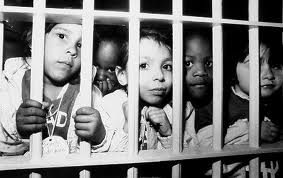 concerned and specialist organizations such as Juvenile Justice Initiative, Campaign for Youth Justice, Global Youth Justice and Youth, Media, and Educational Justice. It is all very well now for talking heads to bemoan the fact that an African American adolescent from a socially-disadvantaged background would have been set immediately on the path towards a long term in the adult system, now that a case exemplifying the other extreme, both in racial and economic circumstances, has surfaced. The media often refer to the fact that African American adults get a worse rap in the criminal justice system than other ethnicities, but rarely do they highlight the gross inhumanity of children in general being treated as adults in that system. Of course African American children get less lenient sentences – they are simply the worst off little adults in a generally imbalanced and unjust system, in a country that, for all its cloying sentimentalization of children and childhood and the universal abandonment and demonization of corporal punishment as a method of child discipline, then reverts back to archaic and brutal principles and methods when children err horrifically.
Jessie H. O’Neill, author of The Golden Ghetto: The Psychology of Affluence, interviewed alongside Drew Pinsky by Jake Tapper on CNN’s Out Front, attempts to  bring attention to the way in which the severe lack of self-identity and self-regulation of children and adolescents who are given too much materially, but too little in the way of parental involvement, guidance and limits becomes interwoven with addiction issues. Pinsky, who, as usual throws out a lot of Diagnostic and Statistical Manual terminology for psychiatric disorders in order to add weight to his fundamentally condemning prescriptions, gets all hot under the collar when O’Neill brings in persuasive ideas about treatment modalities, without recourse to empty psycho-babble. Rather than bleating simplistically, like Pinsky and the rest of the media, about “affluenza” being about monetary wealth, and about it not being an officially sanctioned psychiatric condition, she talks about “affluence” in its broader sense of meeting indiscriminate and excessive demands. She says that this destructive societal influence must be taken into consideration in any therapeutic
intervention with young people who act out. It is ironic, might we even say pretty “rich” to hear Pinsky, who has made a nice living pampering destructive adult celebrities in cushy rehab, now decry similar intervention for a wayward minor. Whatever we think about the appropriateness or not of Ethan Couch‘s rehabilitation plan, “Dr.” Drew is the last person who should be mouthing off about it.
Mark Geragos, appearing on Anderson Cooper 360 encapsulated the culturally-conditioned mindset and reaction towards anyone who commits a crime in the US, including children, with the phrase prosecutorial gang bang. He refers cynically to the fact that what most people want is for juveniles to be “deemed fit for adult court” and committed to adult prison, adding that had this particular kid received such a sentence he would probably have been killed within a year. Realistically, this adolescent, with his, in many senses, overly cocooned lifestyle is in fact unschooled in the street-smarts and subtle social skills one needs to survive in prison.
 In response to questions about if this sentence was “just” – questions that have more to do with adult notions about retribution than they do with any understanding about developmental issues and the moral injunction to care for society’s children, all children, not just the ones who don’t cause us any headaches – Geragos has this to say:
“There is nothing just about the criminal justice system – if you are looking for justice you don’t go into the halls of justice – it doesn’t happen there….”
For all we can ridicule psychologist Dick Miller for advocating predominantly touchy-feely and environmentally cushioned – literally and figuratively – consequences for Ethan Couch’s terrible actions, he succinctly sums up the state of the nation’s morally hypocritical stance when it comes to dealing with juveniles who commit crimes. When Anderson Cooper rightly points out that most juveniles in the United States who kill end up being incarcerated, Miller agrees that is the case, saying:
“And shame on our country for that….”
Why does the nation only react in significant numbers against what they perceive as defendants, including children, “getting away” with crime? The United States is a pariah among so-called civilized countries with respect to the way it treats its excessively incarcerated and excessively sentenced convicts. Where is the united voice of public outrage against how prisoners are treated, and against how our children are subjected to inadequate interventive and rehabilitative resources and to their being thrown to the wolves when they demonstrate how we, as influential adults, have failed to teach them boundaries, limits and any sense of moral responsibility?
 Ethan Couch should have been curbed years ago, by his parents and by the juvenile mental health and justice systems. He should be punished by being placed in a bleak, physically bracing environment without the trappings of luxury to which he is accustomed. He should be challenged and confronted on his attitudes and his behaviours and given substitute, firm but empathic parent-like support to teach him how to become a decent and contributing human being, engaging those overwhelmed and drowned positive attributes that surely lie somewhere in his still-developing psyche. The moment we write him off, as we do plenty of fully-developed adults, we have succumbed ourselves to a strain of “affluenza” – that of squandering our resources on quick-fix, immediate-gratification solutions and failing to invest in productive and growth-oriented assets.
Noel Coward’s song, Poor Little Rich Girl, extracted below, depicts a sorry picture of a young person whose only guidance is their own unfettered and untaught inclination. The adults in this song are completely missing, just as they have been for Ethan Couch. That is hardly “privilege”.
Poor Little Rich Girl
By Noel Coward & Philip Braham
Poor little rich girl…..
Better take care.
Laughing at danger,
Virtue a stranger,
Better beware!
The life you lead sets all your nerves a-jangle,
You love affairs are in a hopeless tangle,
Though you’re a child, dear,
Your life’s a wild typhoon!
In lives of leisure,
The craze for pleasure
Steadily grows;
Cocktails and laughter,
But what comes after?
Nobody knows!……
!
You’re only a baby,
You’re lonely, and maybe
Someday soon you’ll know
The tears you are tasting
Are years you are wasting,
Life’s a bitter foe!
With fate it’s no use competing,
Youth is so terribly fleeting;
By dancing much faster
You’re chancing disaster,
Time alone will show.
 Pitchforks is a child and adolescent development, delinquency and mental health specialist based near Washington DC who writes about the American criminal justice system and its juxtaposition with the media, runs the website Pitchforks, and produces the blogtalkradio show Routing Out.
Links:
Pitchforks: http://babelbooth.com/
Pitchforks on Facebook: https://www.facebook.com/
Pitchforks on Twitter: Pitchforks @PitchforksPosts
Routing Out: http://www.blogtalkradio.com/
Click below to view Pitchfork’s previous posts:
From Knuckle-Dusters to Whole-Meal Scones: The Rise and Fall of the British Yobbo
Amanda Knox Continues to Be Bogged Down by Floating Evidence (A Case of Turd Degree Murder)
Unraveling Justice: Guilty in the Eyes of Banners and Bank Accounts
That Nervously and Obtusely Discussed Evening: Amanda Knox’s Fateful Text Message
Cooked Pasta Sticks on a Grimy wall
Hate, the Oxycontin of Women in Social Media
Leading Lambs to Syllabic Slaughter
If you enjoyed this article, please consider sharing it!


This… “Where is the united voice of public outrage against how prisoners are treated, and against how our children are subjected to inadequate interventive and rehabilitative resources and to their being thrown to the wolves when they demonstrate how we, as influential adults, have failed to teach them boundaries, limits and any sense of moral responsibility?”… is an excellent question that seems to be without a logical and coherent answer.
There often seems to be a disconnect between the lip service that is paid to treasuring, honoring and valuing children and how they are actually treated if they step out of line. As Pitchforks points out, as soon as a kid “steps out of line”, the system — which in theory has been supportive of him up to that point — not only rejects him but is liable to lock him up and as you say — throw him to the wolves. A kid like Ethan Couch, if he was placed in an adult prison would — as we all know — be in grave danger of being endlessly raped, brutalized and even murdered which might actually be an act of mercy given everything else he is going through. There is an almost unfathomably sadistic element to our society that seems to delight in the so-called “bad people” being brutalized.
Good question. There is a petition going around right now about the Logan River Academy. A residential treatment facility in Utah. ”A state where there is comparable lack of oversight and relevant legislation to safe guard vulnerable students in residential programs.”
But the concern always seems to stem from parents whose children were in the system. It does not interest that many otherwise. And it should.
Excellent article Pitch! So concise and incisive.
A brilliant soliloquy on the “poor little rich boy” Ethan Couch, and the lack of caring for juveniles in the system. As always, I shake my head at the gall of Drew Pinsky (I refuse to privilege him with the title of doctor) — what a fraud. This is one hell of a well-researched and nuanced article on the issues, Pitch. Bravo, and thank you for sharing it.
A suitable punishment for Couch: make him Dr. Drew’s “personal assistant” for the next 20 years or so.
Great work on this Pitch. I’d only add that I tend to think of our over-incarceration problem and tough-on-crime dementia as being so closely linked to racism and class warfare that it is difficult to even discuss them separately. In other words, the ruling class did not come up with their “tough-on-crime” agenda in order to curtail rich kids run amok or fraudulent bankers. They did this to bring the hammer down on minorities and poor people — often people who have not even committed violent crimes. So it’s not surprising that when rich kids do screw up terribly, they tend to get off light.
I know this is complex, and I may be simplifying, but that seems to be the big picture here.
I agree with you: juveniles should not be sentenced as adults. When this principle is universally applied, I’ll not be offended by this decision. Until then, I see no way this kid didn’t get consideration a poor, minority offended would have been denied.
Once again, my favorite think piece of the day. Makes me want to write a novel. Thanks, Patrick! More power to the child protectors out there, wherever they are. We can’t escape it, we’re honorary aunties all.
I think if a kid kills, rapes and brutalizes anyone they should be tried as adults. If they have the evil in them to do such horrendous things then yes lock them up. No matter if they are white or black and that is what is done. This kid that hit and killed 4 people did not go out and decide that he was going to kill someone in cold blood yet he should be punished. If it was his first offense then he should be jailed but not with grown men nor should the children that murder and commit terrible acts of violence. They should be locked up and not given tv’s to watch or games to play or access to internet. Some parents do all they can with their children and they still grow to be horrible adults whether rich or poor, black or white. I don’t believe in the racist thing. That has been way overdone and it is time to remember we are all created equal and the laws are equal except for the rich. They get away with more than any poor person despite their color. Giving them excuses is the biggest mistake people make. I came from a very abusive childhood yet I grew up to be a good mother, wife and law abiding citizen. It makes my skin crawl when people use the excuse that an abuser is that way because they was abused as a child. An alcoholic is born with a disease and it should be treated as such whether rich or poor. There are not many places anymore where a person can get the help they need even with mental health issues. It is just not normal for a kid to have the need to murder. Not normal and that goes with rich or poor, black or white or mexican or whatever. I am so sick of hearing that the white people are treated different, yes they are put in the back now and the white male is treated worse than anyone. You all say you care about children then stop giving them excuses and get punishment back in this country. If you spank your child you will get in trouble. I say if they need it spank them good. It sure won’t hurt them and in the long run may just keep a few out of the prisons. There is a big difference between abuse and a spanking.