

“The Black Hand” May Be In Your Neighborhood: The Mexican Mafia Hits The Streets
by Jimmy Macias
Prison gangs have been in the news. When the Aryan Brotherhood was recently suspected of having had a hand in the killing of two Texas District Attorneys, law enforcement publicly acknowledged that the power and reach of prison gangs goes beyond the prison walls. Although the Aryan Brotherhood is undoubtedly the largest and most powerful of the primarily Caucasian gangs, it is in competition with the infamous Mexican Mafia, called La Eme by those in the know. La Eme was founded in 1957 at the Deuel Vocational Institution in Tracy, California by a dozen juvenile inmates. Since then, it has grown into one of the most powerful and feared gangs both in and out of prison. Many books have been published about the inner dealings of La Eme. None resonate as violently and compellingly as Chris Blatchford’s, The Black Hand.
 A key figure in the rise of the Black Hand was former Eme heavyweight, Rene “Boxer” Enriquez. Enriquez, who was born in South Central Los Angeles, was a high ranking member of La Eme until he decided to cooperate with the authorities and abandoned the gang in 2003. Using Enriquez as his key source, Blatchford recounts detailed anecdotes about La Eme, stories such as the stirring saga of Rodolfo “Cheyenne” Cadena, La Eme co-founder. Newly arrived at San Quentin, Cadena, all 5’4” and 120 pounds of him , was confronted in the lower prison yard by a 6’5” 300 pound African-American inmate who planted a kiss on his cheek and announced to anyone listening that from now on the skinny teenager was going to be his “bitch.” Cadena returned a short time later with a jailhouse shank and skewered the big man, clearly demonstrating to those in the yard that he would back down to no one.
In The Black Hand, Blatchford tells numerous stories of prison inmates “disrespecting” the Mexican Mafia and not living to talk about it. Many of La Eme’s leaders and founders are discussed in Blatchford’s book. One La Eme jailhouse legend is Joe Morgan, a tall, bald-headed Croatian who was raised in East Los Angeles. Although he was not of Mexican decent, he joined La Eme when he was 40 years old. Morgan was the closest thing La Eme had to a de facto leader. When La Eme member Salvador “Mon” Buenrostro bad-mouthed Morgan, he was stabbed 26 times in the attorney room at the Los Angeles County Jail as retribution. Legend has it that Benjamin “Topo” Peters shouted: “Die like a man, you punk!” as he carried out the hit on Buenrostro. Morgan’s propensity for violence was legendary. Blatchford tells how he beat his 32 year old girlfriend’s husband to death with a hammer when he was only 16.
The book is structured around Enriquez’s rise and eventual departure from the Mexican Mafia. In an interview with the authorities, Enriquez stated:
“I believe I’m a cut above the rest. As a mafioso, you have to be an elitist. You have an elitist, arrogant mentality…that’s how you carry yourself in the Mexican mafia. That’s how you project yourself.”
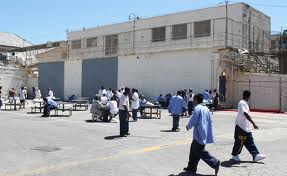 Enriquez’s first brush with La Eme was in Soledad Penitentiary in 1981. He was only 18 years old but already had an extensive rap sheet for robbery and drug trafficking. Blatchford recounts how Enriquez explained that no one asks to join La Eme, membership is by invitation only. In order to get La Eme’s attention, Enriquez beat an inmate from a rival gang, Nuestra Familia, which consists of Latino inmates from Northern California. As a result of his attack, Enriquez was sent to a disciplinary unit called Management Control Unit for “advocating unrest and violence.”
On his first day in his new unit, he received cigarettes and a “calling card” from Daniel “Black Dan” Barela, a respected fully made member of La Eme. Barela’s was known for his “kill first talk about it later attitude.” On one occasion, Barela beat a defense attorney who he believed had done a lousy job in his friend’s federal drug conspiracy case. After beating the attorney, Barela demanded reimbursement of the $8,000 legal fee warning the attorney that this was only a “love tap” and that if he reported the incident, he would kill him.
 By 1982, Enriquez was transferred to San Quentin, and joined many other La Eme heavyweights including Joe Morgan. It was here that Enriquez began working as a runner and moved up in the ranks. As his status grew, Enriquez gradually grasped the political structure of La Eme. Blatchford describes how La Eme hard liners secretly plotted to kill member Nick “Nico” Velasquez for crafting a peace accord with rival black inmates and for pulling rank on other La Eme members. La Eme leader Raymond “Huero Squire” Garduno overheard the conspirators and recruited some followers including Enriquez, to quell the conspirators. Huero Squire and his followers warned the conspirators that if they tried to kill Velasquez, they would be next in line. It worked for a while but Velasquez was killed a few months later in Tehachapi State Prison.
Blatchford skillfully breaks down how La Eme is not structured like a large corporation with a CEO and one board of directors who has the final word, but is rather controlled by numerous strong quasi-independent cliques of La Eme members in various prison facilities and how the loyalties are ever changing. This leads to constant turmoil and strife between the cliques as they strive to maintain and consolidate their power.
On parole in the late 1980’s, Enriquez and other recently paroled La Eme members decided to reestablish their presence in the streets. By the 1990’s, La Eme controlled most Latino street gangs in Southern California and banned all Latino-on-Latino drive by shootings in an infamous gathering of nearly 1,000 gang members at Elysian Park in Los Angeles. La Eme also began collecting taxes from street gangs in return for promising to protect their members when their time came around to go to prison.
 As La Eme grew more powerful it grew much bolder. In 1994, when then California Governor Pete Wilson was promoting Proposition 187, a controversial ballot measure designed to ban undocumented immigrants from receiving public education and other social services, many La Eme members saw this as race baiting. But the disdain for Wilson’s measure also stemmed from a sense of betrayal. According to Blatchford, conservative Latino community activist Rachel Ortiz had campaigned to deliver Latino votes to Pete Wilson and had served as his key advisor throughout his career as a city councilman, mayor, U.S. senator, and governor. Oddly, Ortiz was also linked with La Eme members and was in constant communication with various gang members including Enriquez. La Eme felt betrayed by the anti-Latino flavor of Proposition 187 and they spoke openly about assassinating the governor. Although this never materialized, Blatchford ends this chapter in his book with the following quote from Enriquez:
The real hidden secret was that Governor Wilson was so close to the Mexican Mafia. Rachel Ortiz listens to us [Eme], and those people who work with her listen to her. We may never be able to get next to [in a political sense] a governor or a mayor, but people we know do.
 The Mexican Mafia was also frustrated with actor Edward James Olmos, who directed the motion picture American Me, which portrayed the rise and fall of fictional La Eme character, Montoya Santana. According to Blatchford, La Eme members resented the fact that leading character, Santana, was sodomized during his first night in juvenile hall. In the movie, Santana, rose to become La Eme’s boss in Folsom State Prison. La Eme members claimed that none of their leaders would have been the victims of prison rape. True or false, this reveals a certain sensitivity among the gang members. They also disliked the fact that Santana was loosely based on La Eme legend and co-founder Rodolfo Cadena. In the movie, Santana was ultimately killed by members of his own gang. In real life, Cadena met his demise at the hands of rival gang Nuestra Familia. The implication that one of their founders would be killed by their own was insulting to La Eme. As a result, two consultants who worked on the film were assassinated and Olmos himself was “green lighted.”
As exemplified in The Black Hand, the reach of this prison gang has been beyond the prison walls for quite some time. They have earned the loyalty of many street gangs who wear their allegiance on their backs with the “13” linked to their street gang name. The number 13 represents the thirteenth letter in the alphabet, M, which in Spanish is pronounced “Eme.” Currently, La Eme controls a large portion of the North American drug trade and is closely linked with the drug cartels. The original group of a dozen or so fearless inmates, who were simply trying to create a name for themselves and establish power within a prison yard, has turned into a most powerful criminal enterprise that brings in millions of dollars worth of revenue annually from their criminal activities. And don’t think that this organization has any plans to slow down in the near future. Whatever you choose to call it — La Eme, The Black Hand, or the Mexican Mafia — they are here to stay.
If you enjoyed this article, please consider sharing it!


2 Responses to “The Black Hand” May Be In Your Neighborhood: The Mexican Mafia Hits The Streets
Leave a Reply
AUTHORTALK: DEAD MAN’S HAND BY LUKE MURPHY
Read author Luke Murphy's account of his experience on the road from professional hockey player to successful author.
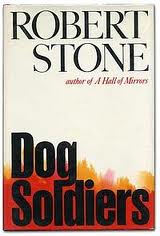
CRIME CLASSIC OF THE MONTH: DOG SOLDIERS

Interesting that a white guy moved to the top of the Mexican Mafia in both movies ‘American Me’ and ‘Blood in Blood out: Bound by Honor.’ To have a white person rise to the top of a Mexican Gang / Mafia and furthermore to say this is a true story can be questionable. All (online) sources point to “yes” this is all true, but one can help but wonder if the media or movie industry actually did this to promote sales. I believe that the media did in fact use its resources to sell movies, however I’ve also learned that “based on a true story” can be so loosely translated. With all the threats that Edward James OLmos received, this becomes all the more interesting more interesting. So how real were the threats?
“According to 60 Minutes, three people who acted as consultants on this film were later murdered because of the depiction of a homosexual rape scene that reportedly deeply offended the Mexican Mafia’s machismo.” (IMBD)
http://www.imdb.com/title/tt0103671/trivia?ref_=tt_trv_trv
Needless to say, the movie did hit some chords with Mexican Gangs. Which points to the fact that there may be some repercussions for the media or movie industry taking advantage of dangerous grounds, such as this example. So yes, this was a money making scheme for the movie industry that, I believe, backfired.
I have a couple of responses to this. First of all, everyone knows that jailhouse sex takes place on a regular basis between male inmates. Sometimes it is consensual; sometimes it is rape. Does La Eme take part in these activities or sanction them? I don’t know. I’ve heard various reports from my Federal clients at MDC-LA (Metropolitan Detention Center – Los Angeles). One client told me that there is a tremendous amount of consensual sex going on at MDC, including consensual sex between Southsiders. He was laughing as he told me it’s quite a sight to see two big, tough gangbangers walking around with their arms around each other. Then they go in a cell, cover the window with a towel and go at it. These fellows however are probably not made menbers of La Eme. Rather, they are regular garden variety gangbangers. They’re not allowed to roll (snitch) but they re allowed to “get down” together.
I’ve also been told that the Southsiders protect anyone they’re “down with” from jailhouse rape. Any attempt at coercive or forced sexual activity is nipped in the bud by the Southsiders. This is obviously a good thing.
As to La Eme getting all pissed off over any claims that they might engage in jailhouse rape or consensual sex between two males, they need to develop a sense a humor. They takes themselves far too seriously. To murder people over these accusations is ridiculous and demonstrates an essential disconnect from reality. I feel bad for the dead men. I also feel bad for the Mexican-American community that is plagued by these unscrupulous individuals.