

Malaysia Airlines Flight 370 and a Look Back to the “Golden Age of Hijacking”
by BJW Nashe
No one enjoys the rigmarole of airport security. Waiting in lines, passing through metal detectors, submitting to random searches and body scans — sure, these are gross inconveniences and invasions of privacy. The recent disappearance of Malaysia Airlines Flight 370, however, reminds us that we may need even more of these irritating security measures if we hope to safely “fly the friendly skies.”
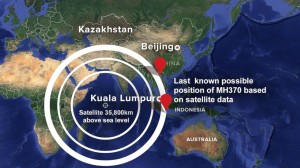 As authorities scramble to figure out what happened to Flight 370 (was it a hijacking, or something else?), we might recall that not long ago — when security was lax, to say the least — passenger jets were being hijacked at an alarming rate. During the years 1968-1972, more than 130 planes were hijacked in America alone. Scores of similar incidents occurred elsewhere in the world during this time period. It was considered a skyjacking epidemic.
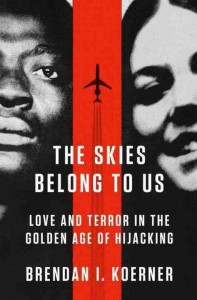 A fascinating book on this topic was published last year. The Skies Belong to Us: Love and Terror in the Golden Age of Hijacking, by Brendan I. Koerner, is worthwhile not only as a thrilling historical narrative, but also as an implicit warning of the potential consequences involved if we lower our guard at the airport. In fact, Koerner’s book shows us that instead of being complacent with our progress since the Seventies — in particular following 9/11 — we should be eager to keep improving air travel security in every possible way. Inconvenience is a small price to pay before clambering on board.
Koerner contextualizes the heyday of American hijackings within the social and political turbulence of the time. The Vietnam War was tearing the country apart, and many of the hijackers were self-styled “revolutionaries” seeking to get planes re-routed to some politically advantageous location. Fidel Castro’s Cuba was an especially popular destination. Hijackers would seize control of airliners using guns, bombs, and jars of sulphuric acid. They typically made outlandish demands for money. Often, they wanted key counter-culture figures released from prison.
 Few of the hijackers were part of organized terrorist groups. Koerner captures the flying-by-the-seat-of-your-pants, haphazard quality of many of these crimes. In particular, he focuses on the strange saga of an unlikely pair who pulled off what remains the longest-distance hijacking in American history. Roger Holder and his girlfriend Cathy Kerkow were a couple of disaffected young leftist hippies. He was an unemployed Vietnam War veteran and she worked at a San Diego massage parlor. Neither was a member of radical groups such as SDS or the Weatherman. Yet they came up with a crazy plan — no doubt inspired by similar crazy plans frequently in the news back then — and in the spirit of the times, they decided to get stoned and go for it.
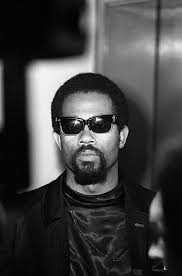 On June 2, 1972, Holder and Kerkow boarded Western Airlines Flight 701 bound from Los Angeles to Seattle. As the plane neared its destination, Holder strolled up the aisle to hand a note to one of the flight attendants. The note said he had a bomb wired in his briefcase, which he would detonate unless they were given a half-million dollars in cash and flown to Hanoi, the capitol of North Vietnam. The note also bore an ominous slogan, “Success through Death.” The pilots decided to comply with his request. The plane, however, lacked the capacity for a direct flight across the Pacific. So Holder, an African American who had been closely following the Angela Davis trial, chose a new destination: Algeria, where Black Panther Eldridge Cleaver had established a base of power.
Despite their limitations — they were scatterbrained, rank amateurs — and much to their own surprise, Holder and Kerkow succeeded with their wild scheme. The pilots, wary of a wild west shootout, turned away FBI agents when the plane refueled at JFK Airport in New York. Eventually, the plane touched down in Algeria, and Holder and Kerkow departed with $500,000. They remained in Algeria for some time, but it was soon apparent they were more interested in smoking hashish on the beach than in hatching revolutionary plots. When left-wing Algerian president Houari Boumedienne dismissed them as irrelevant, 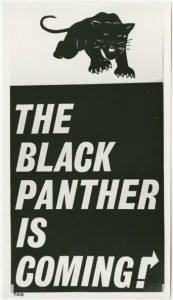 they took the hint and decided to leave the country. The couple found asylum in France, where they were toasted as symbols of radical chic. Their relationship didn’t last, but both managed to stay ahead of the law, for the most part. Holder went on to become director of the Black Panther Party’s “international branch,” until he was overcome by mental illness, which plagued him until his death in 2012. Kerkow enjoyed life as a French socialite, until she mysteriously disappeared.
With so many hijackings going on during a five-year span, we have to wonder why airport security remained so lax. Koerner explains that the airline industry had been lobbying for years against more stringent security measures. Industry leaders looked at their bottom line, and calculated that a successful skyjacking cost them approximately $25,000. Since the incidents rarely involved actual bloodshed, both the airlines and the Federal Aviation Administration (FAA) figured that it was cheaper to put up with the crimes than to implement costly security measures that had the potential to ward off customers. The airlines only grudgingly adopted tighter security controls when outrage over the increasing number of hijackings mounted.
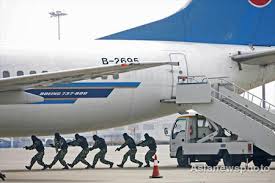 It is odd to realize, in our post 9/11 climate, that most of the hijackings of the “Golden Age” did not end in violent tragedy. The perpetrators back then were not suicide bombers. They used the threat of violence to help them achieve their goals, but the goals were not based on killing people. In addition to the revolutionary playactors, Koerner describes the hijackers as a rogues’ gallery of “frazzled veterans, chronic fabulists, compulsive gamblers, bankrupt businessmen, thwarted academics, career felons and even lovesick teens.” What did everyone in this crowd have in common? “Each had an intensely personal, if sadly deluded, rationale for believing they could skyjack their way to better lives.”
Perhaps it makes sense that before the 9/11 disaster, pilots and flight attendants were trained to follow the FAA-approved “Common Strategy,” which consisted of complying with hijackers’ demands, avoiding “heroic moves” that could endanger passengers, landing the plane safely, and allowing security forces on the ground to take over from there. Sometimes, following tense negotiations, hijackers would either surrender or be apprehended. Sometimes they were able to escape and become fugitives from the law.
I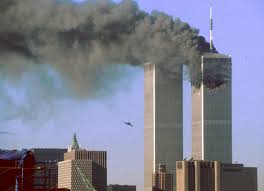 ncreased security and fewer revolutionaries led hijackings to decrease sharply during the 1980s. Still, it was not until the planes crashed into the Twin Towers of the World Trade Center that airline security became a top concern both in the U.S. and throughout much of the world. Even now, we have no reason to doubt that more can be done using the best cutting edge technology to ensure that routine flights are not whisked away to some unintended destination or turned into a horrifying death trip.
No matter what the investigation ultimately concludes regarding Malaysia Airlines Flight 370, the incident serves as yet another wake-up call. Decisions about airline security should not be made solely on the basis of a cost-benefit analysis.
If you enjoyed this article, please consider sharing it!


Good piece, thank you Patrick.
You’re welcome, Mark, though BJW Nashe “penned” this post.
Fascinating post, BJW! Winning the lottery seems to have replaced the hijacking of planes in the late 60′s/early 70′s as the ticket to economic prosperity of many financially-strapped people.
Thanks, Rick. The fact that Koerner identified some of the hijackers from the “Golden Age” as “compulsive gamblers” sort of jumped out at me, too. Now, in addition to the lottery, we also have tribally-owned casinos. We can only hope this will keep our heavy gamblers too preoccupied to get into hijacking.
I agree, BJW. It’s much better to distract our compulsive gamblers with the possibility of striking it rich at Morongo or some other Indian casino than giving them the idea that they can get rich by hijacking a plane and demanding ransom. It’s a good thing that rank amateurs are not hijacking planes nily wily these days (let’s leave the bad disguises to bank robbers). The airlines merely looked at hijackings as a “cost of doing business” in the 1970′s. That type of complacency resulted in airplanes having flimsy cockpit doors, which enabled 19 Saudi hijackers to easily break into the cockpits and crash planes filled with fuel into the WTC and Pentagon on 9/11, or so, goes the official story . . .
I really enjoyed your article. Perhaps no nation on earth has had more experience in combating terrorism than Israel and they take airline security measures very seriously.
Passengers are subjected to intense scrutiny before they board a flight. They thoroughly interrogate each passenger.
Israeli security agents also make use of “profiling.” Every passenger is checked through Interpol to determine if he or she has a criminal record. Passengers traveling from certain countries are more closely scrutinized. Using such practices in the United States could be very controversial and might run contrary to the Constitution and other laws.
Pilots don’t have the luxury anymore to leave the cockpit door unlocked or to let passengers visit their cabin but some continue with this practice.
I know Israel is a small country compared to the US and Canada but it should be a model. They cannot afford to be so cheap and will have to step up to the plate as far as airline security goes.
Good point about Israel. Security is no joke over there. And I would think that many people in North America are willing to put up with “police state” conditions when it comes to airports and airlines (more so than in most other public places). But then, I can’t be sure. Plenty of people in the U.S. might prefer less security if it meant cheaper tickets and shorter lines– so long as they could bring their own guns onto airplanes. The John Wayne approach to airport security: everybody is packing heat. After 9/11, people were talking about the need for pilots to have firearms.
Exactly! And the same goes for personal data but how will they protect that with guns?
We have to sacrifice some to get some but growing up in the shadow of John Wayne means a man does not compromise anything cause he can shoot ya.
Interesting
Great article, BJW! I read The Skies Belong To Us when it came out, and I agree it’s a fascinating read.