

The Martha Moxley Murder Investigation: Cover-Up in Connecticut or Just a Bunch of Bumbling Cops?
by Margaret Garrett
“Bumbling” is the adjective most often used to describe the Martha Moxley murder investigation which began on October 31, 1975 in Belle Haven, Connecticut after the 15-year-old’s dead body was found on the family property under a large fir tree. Her head had been bludgeoned and she had been stabbed through the neck.
To refer to the Greenwich police investigators as “bumbling” was mild compared to some of the criticism leveled against them. For example, they were often compared to the Keystone Cops with the caveat that even the Keystone Cops, would take offense to that comparison. To be fair, the Greenwich investigators had no experience in this area; the last homicide investigation in Greenwich, prior to the Moxley murder, was way back in 1949.
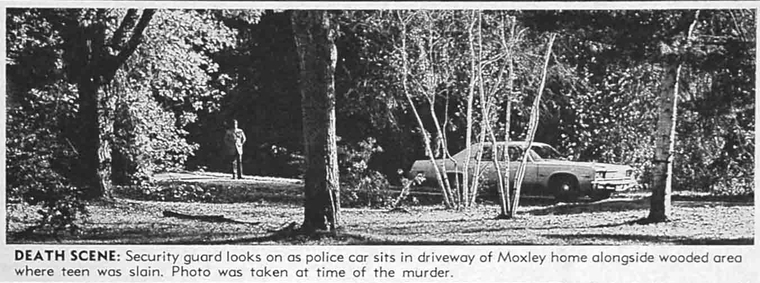 Nonetheless, it does appear that the case was poorly handled right from the start. When the call came in that a body believed to have been Martha Moxley’s had been found on the Moxley property, instead of utilizing seasoned investigators, two youth officers or juvenile officers were dispatched to the scene. The were used to dealing with troubled youths, truancy and delinquents…not a murdered teen. They were instructed to conduct any communication with headquarters from the nearest call box, in the hope that would keep reporters and bystanders at bay. Their orders were fairly simple…stay with the body.
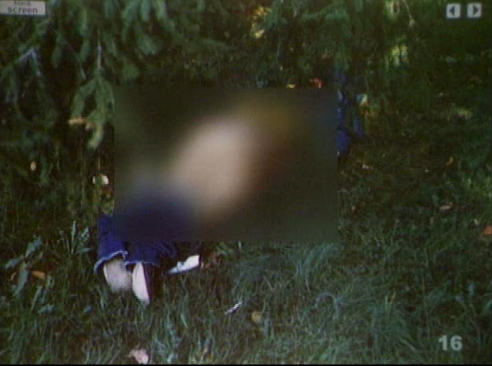 When they arrived at the Moxley home, the officers, based on their instructions, checked Martha for any signs of life. After determining that there were none, one of the officers, after telling his partner to stay with the body, ran to the Moxley home to use the telephone to report their discovery. Instead of doing as he was told, the second officer went to his patrol car and began radioing that a body had been found. When the first officer returned from the house, he found his partner stooped over on the lawn, petting a dog that had wandered onto the scene — a dog that was licking and chewing up leaves smeared with blood…Martha’s blood.
The Greenwich police requested assistance from the Connecticut State Police Mobile Crime Scene Lab. Arriving at the scene, The Lab – while attempting to park — nearly drove over the site where it was later determined that Martha was first attacked.
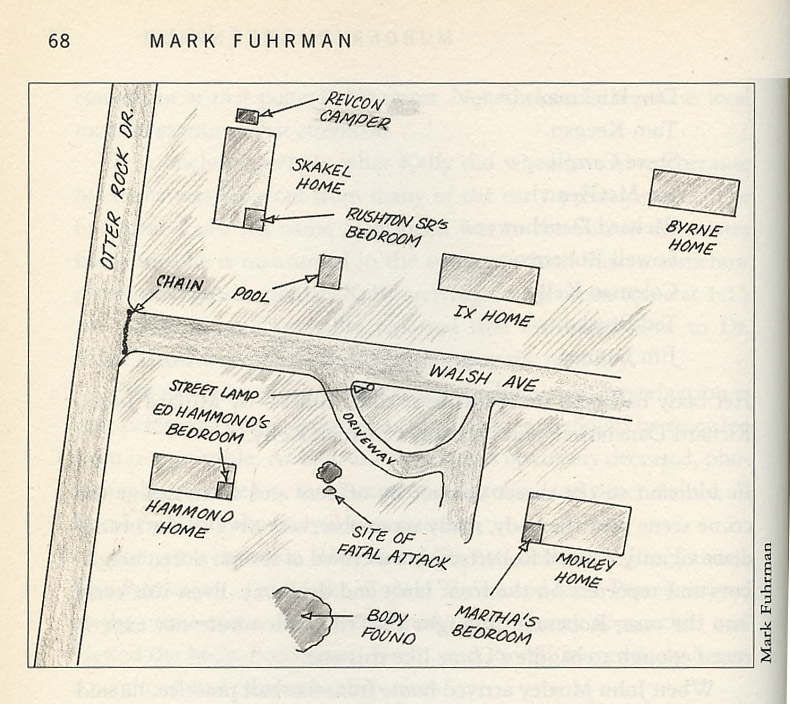 Two of the guests staying at the Moxley home went to where Martha lay and touched and/or moved her body, in an effort to identify her. Some crime scene contamination is expected, of course, because rarely are victims discovered by the police, but by 2:00 pm that afternoon, it was estimated that at least twelve people had touched, moved or stood over Martha’s body.
No log or record of the initial activities at the crime scene was ever recorded. There is no record of who arrived at the scene, at what time, what they did, what they observed or what information or evidence they collected. Some of the officers seen at the site never wrote reports and were referenced in any of the reports that were written. Some of the reports were written days, weeks, even months later. All times set down in writing for that day are approximate or estimated times.
The only doctor to examine Martha’s body at the scene was the Moxley family physician, who was called by the family to identify Martha and positively determine, for the family’s sake, that she was dead.
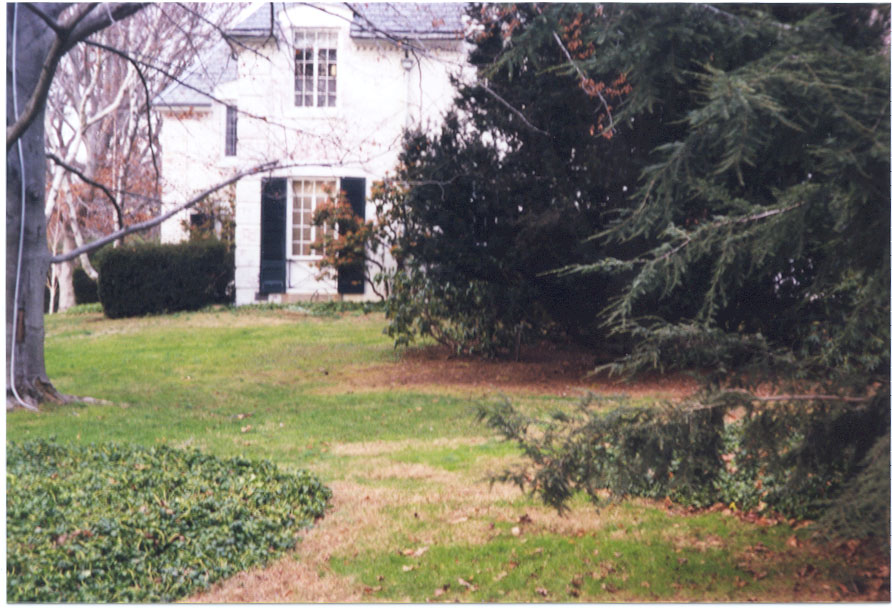 The chief medical examiner summoned to the scene could not make it that day, citing a heavy case load. Martha’s body was moved to the morgue that afternoon by a local funeral director.
The crime scene photographer claimed he didn’t photograph Martha’s body at the scene. Instead, he concentrating on the surrounding area.
Within hours, it was determined that Martha was last seen the evening before in the company of 17-year-old Thomas Skakel.
Within days, it was determined that the murder weapon was a golf club belonging to the late Ann Skakel. The club in question, a Toney Penna six iron, had been broken into pieces, presumably as a result of the fury of the attack.
 No search warrant was ever served on the Skakel residence. When Rushton Skakel Sr arrived back home from his camping trip, he was cooperative with the police and offered to let them look around. Instead of seizing upon this opportunity, the detectives asked 18-year-old Julie Skakel to search for the club and report back to them.
Residents of Belle Haven were aware that Rushton Sr had a special relationship with the Greenwich police. Before the murder, the Skakel children could recall walking through their kitchen only to see officers having lunch. If the officers needed extra cash, they would chauffeur the children around, park cars at large Skakel gatherings, and generally help keep the Skakel children out of trouble.
Despite the evidence pointing at the Skakel family, no one wanted to believe that “one of their own” was capable of such violence. They preferred to explore the possibility that a transient wandered over from the nearby turnpike, murdered Martha and slipped away quickly. They followed up on any lead, of anyone in the area, with any history of violent behavior or reports of “acting strangely” no matter how remote their connection to Martha was, and even if there wasn’t a connection.
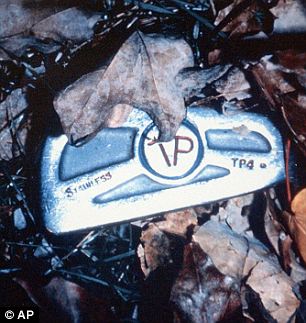 One of the more remarkable findings by Mark Fuhrman, author of Murder In Greenwich: Who Killed Martha Moxley?, was the mystery of the broken Toney Penna golf club. The GPD spent an extraordinary amount of time and resources looking for the “missing piece” of the broken golf club. The club head and two portions of the shaft were found, but detectives were convinced the fourth piece, the handle or grip was “out there.” They drained swimming pools and ponds, searched basements, garden sheds, pool houses, and guest houses. The dragged the beach during high and low tide, and even sifted through garbage. A bulletin went out referencing the critical nature of the search for the missing club piece. This puzzled Fuhrman. Why were they assuming that the club was intact at the time of the murder? Could it have been broken at an earlier point in time?
Incredibly, after becoming familiar with the investigation, Fuhrman deduced that the missing piece was the grip and that it had been seen in Martha’s body, at the crime scene! The first two officers to arrive described it as sticking out of her head. The Moxley family doctor saw it resting near her head, as did two neighbor women, who attempted to identify Martha. Was the piece removed from her body, or did it simply come out as her body was moved by various people? How did this clearly important part of the golf club come to “disappear” from the crime scene?
 Nearly twenty years before the arrest and conviction of Michael Skakel for the murder of Martha Moxley, the Stamford Advocate and the Greenwich Time newspaper asked investigative reporter, Leonard Levitt, to look into the murder of Martha Moxley and the persistent rumors of a police cover-up. Over the years, he uncovered stunning information regarding the investigation. He also formed an unlikely friendship with the newly appointed investigator in the Moxley case, detective Frank Garr. In 1982, Garr began looking into unexplored leads and quickly determined that Greenwich police had been pursuing the wrong suspects. He believed early on that Michael Skakel had killed Martha Moxley and that the Skakel family quickly covered it up. The Skakels were adept at protecting their own. Levitt began chronicling this information and their efforts to bring their discoveries to light. It wasn’t until Mark Fuhrman’s investigation into the case began to create a buzz, however, that the first of Levitt’s articles on the subject was published.
 In his book, Conviction: Solving the Moxley Murder: A Reporter and a Detective’s Twenty-Year Search for Justice, Levitt details this struggle, his friendship with Garr, as well as their enduring friendship with Dorothy Moxley, Martha’s mother. Levitt doesn’t believe Mark Fuhrman solved the crime, he believes Fuhrman was simply seeking redemption based on his disastrous involvement in the O.J. Simpson case. Leavitt believes that Dominick Dunn was drawn to the case due to tragedies in his own life. He believes that detective Garr alone solved this murder. As for his part, Leavitt believes that Michael Skakel murdered Martha Moxley, his family helped him cover it up and he, Leavitt, was determined that they were not going to get away with it.
In out next installment, we will explore the evidence, the other suspects, and the possible reasons it took over 25 years to bring Michael Skakel to court.
Margaret Garrett resides in New England. She is a recently retired RN and has been married to the same man for nearly 35 years. She has grown children and recently become a grandmother for the first time. She loves her new-found freedom and enjoys — in no particular order — gardening, trial watching, true crime and blogging.
Please click below to view Margaret Garrett’s earlier post introducing the Michael Skakel – Martha Moxley murder case:
Kennedy Cousin Michael Skakel Granted New Trial in Martha Moxley Murder Case
If you enjoyed this article, please consider sharing it!


sad case
Another fascinating post, Margie. What a sad and complicated case this is. May justice be done for Martha Moxley.
A fairly simple case made complicated because of the power of the “Irish Mafia”