
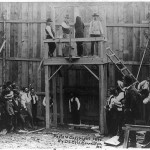
Ten Terribly Botched U.S. Executions
afterword by Patrick H. Moore
Capital punishment has been eradicated in all of western Europe and most of eastern and central Europe. Most of the countries of the Americas have also abolished the death penalty. Indeed, it was repealed in South Africa after the end of apartheid, where it clearly had been one of the tools of repression used by whites against the black majority. (Countries still using the death penalty include China, Japan, and many Muslim nations.)
Michael Roberts of Denver Westward Blogs compiled the following group of ten U.S. executions that went horribly and inexcusably wrong. He culled the text for the first nine items from Radelet’s item “Examples of Post-Furman Botched Executions,” shared by the Death Penalty Information Center. The final item is derived from Alan Prendergast’s 2012 post “Eddie Ives’s botched execution and replacing the noose with the gas chamber.”
So without further ado:
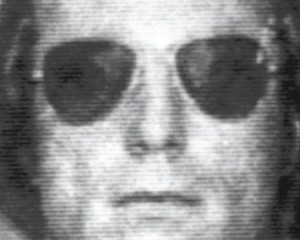 Frank James Coppola.
August 10, 1982. Virginia. Electrocution.
Although no media representatives witnessed the execution and no details were ever released by the Virginia Department of Corrections, an attorney who was present later stated that it took two 55-second jolts of electricity to kill Coppola. The second jolt produced the odor and sizzling sound of burning flesh, and Coppola’s head and leg caught on fire. Smoke filled the death chamber from floor to ceiling with a smoky haze.
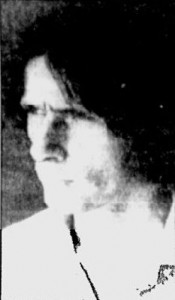 Jimmy Lee Gray
Sept. 2, 1983. Mississippi. Asphyxiation.
Officials had to clear the room eight minutes after the gas was released when Gray’s desperate gasps for air repulsed witnesses. His attorney, Dennis Balske of Montgomery, Alabama, criticized state officials for clearing the room when the inmate was still alive. Said noted death penalty defense attorney David Bruck, “Jimmy Lee Gray died banging his head against a steel pole in the gas chamber while the reporters counted his moans (eleven, according to the Associated Press).” Later it was revealed that the executioner, Barry Bruce, was drunk.
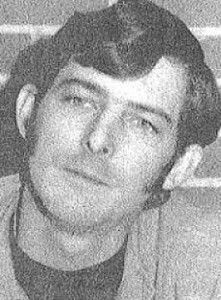 John Evans
April 22, 1983. Alabama. Electrocution.
After the first jolt of electricity, sparks and flames erupted from the electrode attached to Evans’s leg. The electrode burst from the strap holding it in place and caught on fire. Smoke and sparks also came out from under the hood in the vicinity of Evans’s left temple. Two physicians entered the chamber and found a heartbeat. The electrode was reattached to his leg, and another jolt of electricity was applied. This resulted in more smoke and burning flesh. Again the doctors found a heartbeat. Ignoring the pleas of Evans’s lawyer, a third jolt of electricity was applied. The execution took fourteen minutes and left Evans’s body charred and smoldering.
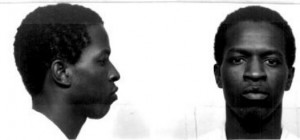 Raymond Landry
December 13, 1988. Texas. Lethal Injection.
Pronounced dead 40 minutes after being strapped to the execution gurney and 24 minutes after the drugs first started flowing into his arms. Two minutes after the drugs were administered, the syringe came out of Landry’s vein, spraying the deadly chemicals across the room toward witnesses. The curtain separating the witnesses from the inmate was then pulled, and not reopened for fourteen minutes while the execution team reinserted the catheter into the vein. Witnesses reported “at least one groan.” A spokesman for the Texas Department of Correction, Charles Brown (sic), said, “There was something of a delay in the execution because of what officials called a ‘blowout.’ The syringe came out of the vein, and the warden ordered the (execution) team to reinsert the catheter into the vein.”
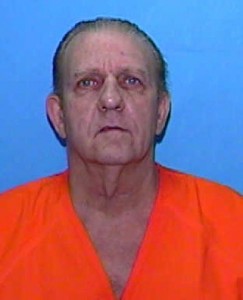 Jesse Joseph Tafero
May 4, 1990. Florida. Electrocution.
During the execution, six-inch flames erupted from Tafero’s head, and three jolts of power were required to stop his breathing. State officials claimed that the botched execution was caused by “inadvertent human error” — the inappropriate substitution of a synthetic sponge for a natural sponge that had been used in previous executions. They attempted to support this theory by sticking a part of a synthetic sponge into a “common household toaster” and observing that it smoldered and caught fire.
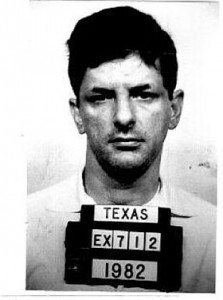 Stephen Peter Morin
March 13, 1985. Texas. Lethal Injection.
Because of Morin’s history of drug abuse, the execution technicians were forced to probe both of Morin’s arms and one of his legs with needles for nearly 45 minutes before they found a suitable vein.
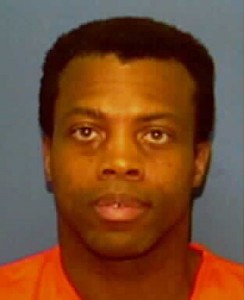 Pedro Medina
March 25, 1997. Florida. Electrocution.
A crown of foot-high flames shot from the headpiece during the execution, filling the execution chamber with a stench of thick smoke and gagging the two dozen official witnesses. An official then threw a switch to manually cut off the power and prematurely end the two-minute cycle of 2,000 volts. Medina’s chest continued to heave until the flames stopped and death came. After the execution, prison officials blamed the fire on a corroded copper screen in the headpiece of the electric chair, but two experts hired by the governor later concluded that the fire was caused by the improper application of a sponge (designed to conduct electricity) to Medina’s head.
 Stephen McCoy
May 24, 1989. Texas. Lethal Injection.
He had such a violent physical reaction to the drugs (heaving chest, gasping, choking, back arching off the gurney, etc.) that one of the witnesses (male) fainted, crashing into and knocking over another witness. Houston attorney Karen Zellars, who represented McCoy and witnessed the execution, thought the fainting would catalyze a chain reaction. The Texas Attorney General admitted the inmate “seemed to have a somewhat stronger reaction,” adding “The drugs might have been administered in a heavier dose or more rapidly.”
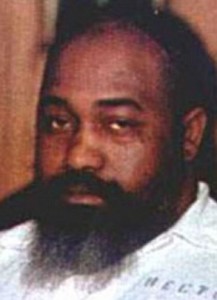 Rickey Ray Rector
January 24, 1992. Arkansas. Lethal Injection.
It took medical staff more than fifty minutes to find a suitable vein in Rector’s arm. Witnesses were kept behind a drawn curtain and not permitted to view this scene, but reported hearing Rector’s eight loud moans throughout the process. During the ordeal Rector (who suffered from serious brain damage) helped the medical personnel find a vein. The administrator of State’s Department of Corrections medical programs said (paraphrased by a newspaper reporter) “the moans did come as a team of two medical people that had grown to five worked on both sides of his body to find a vein.” The administrator said “That may have contributed to his occasional outbursts.” The difficulty in finding a suitable vein was later attributed to Rector’s bulk and his regular use of antipsychotic medication.
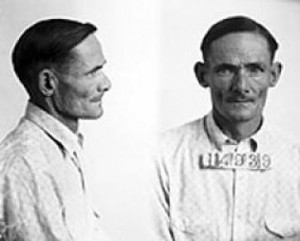 Eddie Ives
Ives, a barber and burglar, had been convicted of the fatal shooting of a cop after Denver police crashed an illegal booze party on Curtis Street. (A second officer was wounded in the 1928 shooting, only to be slain a few days later by a nurse at Denver General Hospital who happened to be his spurned lover; Denver’s scandal-crazy dailies pumped that case into a Roaring Twenties version of “the crime of the century,” as detailed in my 2003 feature “Love Crazy.”) He managed to stall his execution for months by pretending to be insane, dipping his chow in the toilet in his cell and babbling in strange tongues.
After that ploy failed and he was pronounced sane, Ives won another delay when a riot at the state penitentiary gutted three cell houses and left twelve dead, including seven guards. One of the casualties was Jack Eeles, 77, who’d been the prison’s hangman for thirty years.
Ives, who weighed only eighty pounds, had a longstanding belief that he was going to beat the noose. “Hell,” he reportedly told a Denver detective years before he got the death sentence, “they couldn’t hang me if they wanted to. A noose couldn’t crack my neck. I’m too small to spring the trap.”
But time ran out for Ives on January 10, 1930. He was escorted to the gallows, the noose tightened around his neck. A guard pulled a lever that sent a weight hurtling down a chute. The weight was supposed to pull the rope taut; then the prisoner would break his neck as he fell through the trap. But Ives was too light. As the weight fell, he went hurtling toward the ceiling. The rope jumped off the pulley and Ives fell to the floor, gasping for breath.
“You can’t hang a man twice,” he said.
But they did. According to one witness, it took three attempts. Ives was strangled for 23 minutes before he was pronounced dead. At that time, the executions were closed to the press, but word leaked out of his slow and excruciating demise. “Colorado has one of the most ghastly hanging machines possible,” Thomas Tynan, a former warden for the penitentiary, told the Rocky Mountain News. “More than half of the men executed have not been hanged at all. They have strangled.”
* * * * *
I’ve long thought that the sensible and merciful way to execute inmates would be to simply give them a massive dose of narcotics. It could be given to them in their food or administered by a simple intra-muscular injection. No need for all that nasty probing for a vein. The inmates would die peacefully and painlessly. There would be very little drama and no possibility of human error. So why hasn’t this common sense approach been adopted? You tell me, my friends…
If you enjoyed this article, please consider sharing it!


This is horrifying. I know these people were guilty of vicious crimes, but how can we call ourselves civilized when we react by torturing them?
I often get verbally beaten for saying this, but I’ve long been against the death penalty. It’s just barbaric.
Awhile back, I wrote an article for my blog on the psychological damage it does to the people tasked to be the executioner. Rarely do people give a thought to what it must be like for them to commit state-sanctioned murder.
Like soldiers who often suffer PTSD after killing people in war. It is not usually easy to live happily once u have killed. Not these days anyway. I think most murderers would do things differently given their time again.
I have a very good friend who is a PTSD vet from Vietnam. It marks a man or woman and it very hard to overcome.
I’m basically against the death penalty. I don’t believe it accomplishes much. I might make an exception in heinous crimes against children.
Darcia, would you please send me a link to your blog post on the “psychological damage” issue? It might be something I would be interested in re-posting with your permission, of course.
Your article reminds me of Justice Blackman’s famous statement made in a dissent in one of his last death penalty cases, “I will no longer tinker with the machinery of death.” Societies have been trying to find “humane” ways of administering the death penalty for hundreds of years without much success — even Dr. Guillotine one day came to regret his invention. The human error factor will always prevent society from developing a perfect, humane way to administer the death penalty. That is yet another reason to eliminate this barbaric punishment — not to mention the inherently arbitrary and discriminatory nature of the ultimate penalty (it is disproportionately imposed against racial minorities and the poor), the many examples of wrongfully convicted persons who were executed, and the outrageous costs of keeping condemned inmates in prison during endless death penalty appeals compared to the cost of LWOP sentences.
Im sorry but whilst researching these peoples crimes and the horrific nature and barbaric way their murders were committed I find my emotions faltering between thats not a nice way for them to die and wow thats called just desserts. None of their victims chose to die, let alone die in the way they did, and quite frankly all of these death row executions could have been avoided if these men had just not committed their heinous crimes. It really is that simple. Whilst I dont believe that the death sentence is a deterrent, I do believe that the world is a much safer place without these killers in it. Just a shame that when their cases are proven beyond reasonable doubt dna etc that their executions take so long because of the appeal process. That is what is unjust both to the victims and their families who none of asked to be put in the tragic situations they were put into. These men had a choice the victims and families did not.