

Oh Crap! Serial Killer in the Family
posted by Patrick H. Moore
Not all serial killers are weird like Charles Manson or Jeffrey Dahmer. Or at least they’re not totally weird. They may even have redeeming features. A surprising number of the multiple slayers who are washed up on the rocks of justice and are serving lifetime prison terms, or are languishing on Death Row, once had families and children, allegedly presided at backyard barbecues and may have even gone to PTA meetings. Others were young men just coming of age who made mistakes they couldn’t undo.
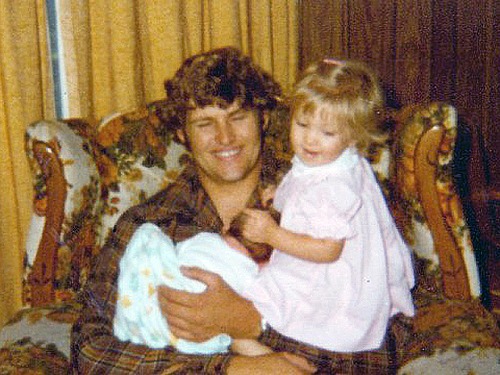 Or so Sarah LeTrent of CNN would like you to believe. Witness this conversation between Melissa Moore, age 33, and her father, Keith Hunter Jesperson, in a post entitled “A killer in the family.” Jesperson was a long distance truck driver who strangled eight women while on the road and sent letters to the local police stations bragging about his conquests. He had the habit of signing his mea culpas with a Happy Face and was dubbed, the Happy Face Killer:
“Missy, you need to change your last name,” the shackled man in the orange prison jumpsuit said into the receiver, staring blankly at his 15-year-old daughter’s tear-stained face.
“That’s when I knew that these things were true,” recalls Melissa Moore, now 33.
Until that day, the man behind the glass partition, Keith Hunter Jesperson, was simply her father; the one who used to tuck her into bed at night “like a burrito.”
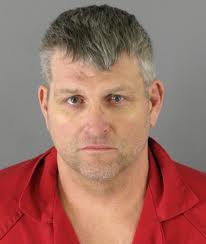 Keith “Happy Face” Jesperson went to trial and lost. He is now serving life in prison with no possibility of parole. If we dig a little deeper, we discover that LeTrent’s article is not telling us the whole story. Jesperson, who was Canadian born, had always been weird, the typical “loner” child with a propensity to torture. Wikipedia has this to say about him:
He had a violent and troubled childhood under a domineering, alcoholic father. Treated like an outcast by his own family and teased by other children for his large size at a young age, Jesperson was a lonely child who showed a propensity for torturing and killing animals. Despite consistently getting into trouble in his youth, including twice attempting to kill children who had crossed him, Jesperson graduated from high school, secured a job as a truck driver, got married, and had three children. In 1990, after 15 years of marriage, Jesperson was divorced and saw his dream to become a Royal Canadian Mounted Policemandashed following an injury. It was that year, after returning to truck driving, that Jesperson began to kill. Jesperson is known to have killed eight women over the course of five years. Strangulation was his preferred method, the same method he often used to kill animals as a child.
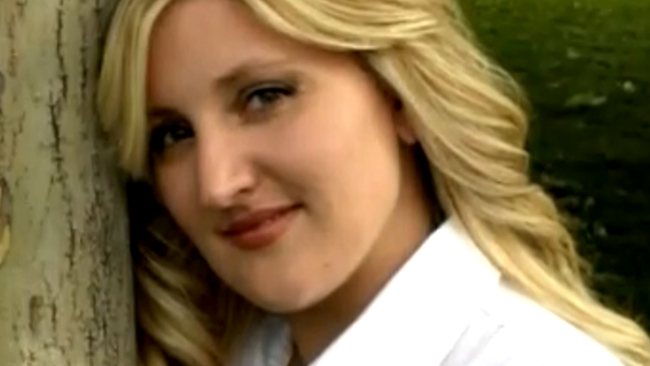 So despite his horrific childhood, the Happy Face Killer kept it together for a long while, many years as a family man, before he snapped and went on his killing spree. Melissa Moore no doubt realizes that there are worse things than being tucked into bed “like a burrito”. Might her day have come — if her father hadn’t been stopped?
Whatever the circumstances, very little hits a family harder than discovering that one of their members is a serial killer or a mass murderer. Children don’t even want their parents to sing in public. Imagine how they feel when they find out Dad is a murderer.
After much soul-searching, Melissa Moore made the reluctant decision to sever ties with her father. She changed her name when she got married and set out to build a new life.
In her article, Sarah Letrent states:
Moore is a part of an exclusive group, those who share blood relations with someone perceived by the public as a monster: a mass murderer. With that unenviable tie can come isolation, guilt, grief, fear, disbelief, even post-traumatic stress disorder, in addition to a very public stigma.
In the aftermath of a massacre, questions and criticism are frequently directed at the parents, spouses and children of the accused. The public sometimes sympathizes, often criticizes and even goes so far as to blame family members for the actions of their kin.
 This issue of guilt by association can be extremely hard for the family members of serial killers to deal with. A part of you is horrified beyond words by what Dad or Junior (or in rare cases Mom or Sister) has done , but a part of you will still want to defend your shamed loved one.
Sarah LeTrent cites Michael Price, a professor of evolutionary moral psychology at Brunel University in London, who states that people are hardwired to defend their kin, like Melissa Moore did before she realized her father’s guilt.
“There will be strong psychological and emotional incentives to defend and remain loyal to the family member, and to delude and self-deceive themselves about the reality of their relative’s guilt,” Price said.
At the same time, Price said individuals may be prone to protect their own reputations and disassociate themselves from the killer to avoid being ostracized.
“They may experience anger at the relative for putting them in such a conflicted position,” Price said.
In short, the family members of convicted serial killers will be pushed and pulled in diametrically opposed directions. They may wake in the morning feeling the deepest filial connection to their fiendish family member and by noon they’ll be wishing that they had never even met.
One of the hardest things innocent family members face is the public expectation that they will step up to the plate and make a statement about what has happened. I know what you’re thinking, that you’d rather chew on barbed-wire, but the expectation is nevertheless front and center in the mind of the eager, avaricious public.
Recently Adam Lanza’s father, Peter, met with Robbie and Alissa Parker, the parents of 6-year-old victim Emilie, to discuss his son’s actions.
“One of the main reasons that I wanted to speak to him was I wanted to just speak to him as a father, one father to another father,” Robbie Parker told CNN’s Piers Morgan. “And I understand that, despite the circumstances, that he lost his son and that he needed to grieve that as well, just as much as I needed to grieve my daughter. And so I wanted to express those condolences to him, and I felt that we were able to do that for each other.”
You can’t help but feel considerable respect for Robbie Parker. I can’t help wondering how he feels about this revelation:
In documents released Thursday, it was revealed that 20-year-old Sandy Hook shooter Adam Lanza’s mother (whom he shot in the forehead before turning his guns on 26 more victims, as well as himself, at the elementary school) gave him money earmarked to purchase weapons and allowed him to keep a gun safe in his bedroom.
 Susan Klebold, the mother of Dylan Klebold, one of the Columbine shooters, finally opened up in a 2009 issue of Oprah Magazine with a personal essay titled “I Will Never Know Why.”
She wrote: “Through all of this, I felt extreme humiliation. For months I refused to use my last name in public. I avoided eye contact when I walked. Dylan was a product of my life’s work, but his final actions implied that he had never been taught the fundamentals of right and wrong. There was no way to atone for my son’s behavior.”
 For pure carnage, Virginia Tech gunman Seung-Hui Cho, who killed 32 people before shooting himself, in April of 2007 is at or near the top of the list. Of course Cho took the easy way out. His family was left to “meet the press.” On behalf of the family, Sun-Kyung Cho, the sister of the shooter, said:
“We have always been a close, peaceful and loving family. My brother was quiet and reserved, yet struggled to fit in. We never could have envisioned that he was capable of so much violence. He has made the world weep. We are living a nightmare.”
The Chos haven’t spoken to the media since.
The bottom line is that having a serial killer or a mass murderer in your family will, more likely than not, turn your life into a special kind of mental hell. It will always be with you — and though strong souls may perhaps keep it at bay — the memory will never be silenced entirely. Among other things, unless you can somehow manage to live an entirely private existence, you will inevitably find yourself “in the cross hairs” of public expectation, obliged to rub elbows with the hungry masses and talk about what happened which somehow, paradoxically, makes all the listeners feel a little more alive.
If you enjoyed this article, please consider sharing it!


Patrick, what a sensitive and thoughtful piece about an excruciating subject. You have hit the nail on the head about relatives being burdened by the foaming-at-the-mouth public to somehow “explain themselves” about something for which there are no adequate explanations. This brings me back to a theme I talk about often, which is the masses’ desire to put all the blame and responsibility on the “other”, the perpetrator, who must be demonstrated to be of a different species than “us”. Or if he is dead, as he usually is in mass shootings, then by extension we must project our rage onto his survivors. Adam Lanza’s mother was an extreme exception who showed remarkable lack of insight and responsibility – I don’t think she is representative, though many relatives try to cover up for their perpetrator loved ones.
Society, however, will never prevent repeat occurrences of such horrors if it continues to view killers simply as an alien race that gives people a reason to hate something publicly and vehemently. Many societal factors such as inadequate mental health monitoring and services, as well as ignorance, intolerance, prejudice and indifference on the part of those who deem themselves to be “normal” contribute to dangerous individuals being unnoticed, marginalized, or even targeted for provocation.
As for serial killers having redeeming features, I encountered this perspective from Nancy, the subject of my 6-part series on her recovery from Rodney Alcala’s killing her best friend. Her story is a very interesting commentary on Alcala, assessing him objectively and viewing him from an almost banal perspective.
Please direct your readers to the series called “Revenge to Ridiculousness” on the Routing Out site of blogtalkradio.
As a parent of two young men, I can’t even imagine the horror of learning one of them is a serial killer or mass murderer. We often forget the parents and extended family suffer a loss, as well. We want to blame them instead of understanding this, which is completely unfair in most instances.
That’s why I think this is a pretty interesting post. The Dahmers and Mansons who grew up in bizarre families get the publicity but apparently many serial killers came of age in ordinary mildly dysfunctional families. I personally felt sympathy for Keith Jesperson’s daughter.
I as a mother would have a hard time living with myself if one of my children was a killer even if she/he killed by drunk driving. As a parent I have always tried to teach my kids right from wrong but sometimes there is nothing you can do. I have a daughter that uses meth and alcohol and I am worried everyday for her or some innocent victim if she chooses to drive. I don’t know how I would live with that guilt.
I’m sure you’ve tried to get help for your daughter. Please don’t give up. I imagine she’s young and that it’s not too late. Perhaps you can find a rehab program for her.
Her addiction started when she was 15 and she is 45 now. We have tried everything from putting her in hospital to about 12 rehabs plus therapy. It is a family disease so we have always attended everything she has been in. I also went to alnon and have learned to let go and let God. She has had 3 kids and lost all. I raised the first daughter now 26 2nd was raised by dad and 3rd is now in foster home. I will always have hope but think at some point in time I will get that dreaded phone call. Thank you for the incouragement.
Penny, I am so sorry. Well, stay in touch with us here at ATCB. As you can see, we are starting to development a pretty cool community of friends and supporters. God bless!
Yes I will and thank you