
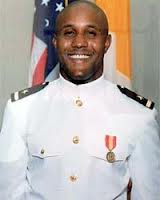
 A number of words and phrases immediately come to mind in regard to the murderous rampage and fiery demise of ex-LAPD Officer Christopher Dorner. “Learning event” is not one of them. However, these are precisely the terms used by San Bernardino County Sheriff John McMahon in his first public interview since the Dorner tragedy concluded. In addition to other statements, McMahon is quoted as follows:
“As I thought about this, if it was not our department involved in this event, we would be watching this event on TV, looking at what they were doing and asking ourselves, ‘If this occurred in our county, would we be prepared to deal with it, and how would we deal with it?’ So this is a learning event for law enforcement across the country. Clearly, everybody can learn from an event like this.”
Of course the sheriff is speaking of tactical considerations, particularly in response to the intense media scrutiny over the Department’s use of pyrotechnic tear gas as a means of flushing Dorner out of the barricaded cabin in which he spent his final moments, steadfastly refusing to surrender to authorities. Sheriff McMahon is indicating that, based on the experience gained from this event, law enforcement everywhere will be even better able to deal with the next heavily armed psychopath who stages a standoff.
Now that the smoke has cleared, the public might take a broader perspective than the sheriff in terms of what we can learn from the whole tragedy. Or maybe not. The problem is that in the Los Angeles area alone, there have been far too many of these high profile “learning events” over the years (the Rodney King beating and OJ Simpson trial come foremost to mind). And the country as a whole has had multiple lessons in gut-wrenching mass violence — most recently the mass shootings in Aurora, Colorado and Newtown, Connecticut. Indeed, for many of us, this series of “learning events” is starting to seem like a continuing education class from hell, with the same material covered over and over again, never-ending homework assignments, and no graduation in sight.
What more can be gleaned from yet another tale of mass violence that we haven’t already had to work through umpteen times before?
Nevertheless, since the Sheriff is talking about learning, let’s go ahead and review what happened in the Dorner case, before some new televised outrage commands our attention. Who knows? Perhaps we will be provided some slight new ray of illumination when it comes to violent crime in America.
Christopher Dorner was a former U.S. Navy reservist who worked as an LAPD officer from 2005-2008. He was dismissed by the department under controversial circumstances in which he filed allegations of police misconduct against a fellow officer. Dorner’s appeal to the L.A. District Court was unsuccessful; the Court upheld his dismissal from LAPD. In early February 2013, Dorner posted a manifesto online, detailing his grievances with the police department and the court, and threatening violent retribution.
 Dorner then evidently went on a killing spree that included the alleged murder of two civilians and one police officer. The largest manhunt in the history of LAPD ensued, becoming a headline news story across the nation. Several days later, Dorner was tracked down to a cabin in the Big Bear Lake area of the San Bernardino Mountains after killing one police office in Riverside, California and seriously wounding another. At the cabin, he exchanged gunfire with law enforcement. At some point during the altercation, the cabin caught fire. Dorner died inside of an apparent self-inflicted gun wound.
For the LAPD, which has spent years trying to rehabilitate its image, the Dorner saga is precisely the sort of story they would rather not be dealing with. For one of their own to condemn them in public and then start killing people in cold blood is clearly a public relations nightmare. And the unfolding drama quickly set off all kinds of cultural alarm bells, some of which are still ringing. For one thing, there were the overblown, inflammatory optics of the hunt for an “angry, murderous black man” paraded all over TV and the internet. In Los Angeles, where tension between minorities and police tends to run high, visuals of this sort can be highly problematic and non-productive, to say the least. Even more troubling, however, was the growing furor surrounding the claims made in Dorner’s manifesto. At times public discourse around the story seemed on the verge of spiraling out of control, losing sight of the fact that, regardless of any “reasons,” multiple murders had been committed with calculated brutality, and the suspect was still on the loose.
A significant number of people — no great admirers of LAPD — sympathized with Dorner’s manifesto. In that document, which may rank in scope of derangement with the infamous “Unabomber Manifesto,” Dorner recounts an incident in which he stood up for the rights of a homeless man being kicked by a fellow officer. This, Dorner asserts, led the department to turn on him; his dismissal was a form of racist payback. The victimization angle undoubtedly won Dorner some “fans” in the community. Never mind that instead of simply airing his complaints, Dorner implied that he was armed and ready to go on the offensive. On February 12, a Facebook page called “We Stand With Christopher Dorner” had garnered 27,000 likes, and soon other similarly slanted web sites and discussion groups emerged online.
The ghastly conclusion of the “learning event” — essentially a shootout followed with an auto-da-fe apparently kindled by an army of law enforcement personnel — was far from reassuring for anyone except perhaps the most hard-line law and order types among us. Plenty of us were disturbed by the 1993 Waco siege of the Branch-Dravidian complex; the Dorner inferno seemed to strike a similar nerve.
What’s remarkable is the degree to which everyone involved in this tragedy seems to be tainted by the ordeal. The LAPD, once again, finds itself besmirched by accusations of corruption and brutality and racism. Dorner himself appears to have somehow snapped and turned into a homicidal maniac willing to drag an entire society along with him on his crazed death trip. (What possible injustice — even in LAPD terms — could justify such actions?) The San Bernardino County Sheriff’s Department is being criticized as fire-bombers. The ratings-obsessed mainstream media appear once again to be often no better than creepy voyeurs. And Dorner’s “fans,” so full of hatred for all police officers in general, come across as delusional.
It’s a shameful event all around. As for “learning,” I suppose we can spend time pondering yet another example of the insanity involved when individuals who have some personal grievance or mental disorder are heavily armed and go on a violent rampage. Of course, we are already all too familiar with that scenario.
For now, I suppose it will have to be enough to know that the San Bernardino County Sheriff is committed to the learning process.
As for the rest of us, class resumes tomorrow, and the next day, and the day after that. The lesson will be the same: violence leads to more violence. A heavily armed society is a society run amuck. These are the facts whether we like it or not.
posted by BJW Nashe on March 21, 2013
If you enjoyed this article, please consider sharing it!


Based on current media coverage, the final question raised by the Christopher Dorner tragedy does not involve any pondering of “learning events”. It addresses something a little more pertinent to our society’s preoccupations – who gets the reward?
You raise an interesting question and I will try to formulate an answer. Imagine our society is shaped like a pyramid. At the top along with the politicians and the securities traders are the big money-men, who used to be called “captains of industry” and who might more properly be called, in contemporary usage, “captains of business and enterprise.” Among this group are the weapons manufacturers. The U.S. produce more firearms and associated instruments of destruction by far than any other country on earth. This weaponry is of course purchased by every police department, not to mention the military. Firearms easily filter into the hands of just about anyone who wants them through what is known as “the grey firearms market.” As a result of this, the U.S. is heavily armed and very dangerous, both at the national level and on the streets. I recall the time I was in Anchorage on a case. I stepped out of the lawyer’s office onto the street and overheard a guy talking casually into his cellphone enumerating the numbers of guns he had in his house. Just a regular American keeping tabs on his guns.
So who gets the reward(s)? Certainly, the captains of business and enterprise. Certainly our police departments who, it would appear, get to justify orders for even more weaponry every time something like the Dorner imbroglio occurs. If I might turn your question on it’s head, “who are the victims?” Well, just about everyone who’s every died for no reason, another victim of American gun culture.
Christopher Dorner was a mentally ill man who felt victimized by the police. He should not have engaged in the violence against his victims, no matter how difficult his situation was. I do not think that he had any right to do what he did. But to some he remains a hero because of their hatred and animosity towards the police. This is unfortunate that some people would sympathize with such a crazed-maniac. I think that the police had to do what they had to in order to restore order and civility against people who threaten to harm society and the established order.
I agree with your comments to some degree. Dorner clearly had no right to do what he did and had to be brought to justice. What is unfortunate, however, is the paramilitary excess that law enforcement engaged in in tracking him down. Perhaps, the “authorities” had no real choice in going after Dorner but they certainly didn’t have to shoot the newspaper delivery guy/girl. The “shoot first, ask questions later” mentality exhibited by law enforcement simply gives the “cop haters” more reason to hate law enforcement. As long as law enforcement chooses to act in a childishly macho fashion, the cop-haters will remain legion.
I agree with that. That is why we must create new ways of policing our communities especially those with underclass minorities. We need to a take a holistic approach to solving society’s problems by addressing the inequalities that permeate our country and by devoting less resources to the prison industrial complex that has stagnated our nation’s progress.
We must attack the educational gap in our country and the income inequalities to lessen the crimes that are perpetuated by working class whites and other racial minorities. That is why I am an advocate for the best way to rescue our country and economy is to use our resources wisely and to invest heavily in education and job trainin
I agree with everything you say here. The educational gap leaves the underclass woefully unprepared to survive effectively in a difficult world. The problem is, however, the system prefers it this way. Of course lip service is paid to the need for better education but what is mostly instituted is more advanced math and science classes. There is little emphasis on developing critical thinking skills or the humanities, in general, for that matter,
I don’t disagree that we, the U.S. I mean, have a gun problem. But while episodes like Aurora and Sandy Hook may be largely incomprehensible, the more routine violence that takes far more lives is not so unpredictable. We talk about gun control and background checks, but decriminalizing drugs, even just some of them, would go much farther in dealing with our gun violence problem. I know a guy who’s not pro-gun, but he’s very good at anti-anti-gun. He can take down anti-gun arguments fairly easily because they are so often based more on emotion than evidence. Here’s an example from a mailing list exchange after Sandy Hook (the thing with caret signs is what he’s responding to). I’ll put a link afterward where you can read the back and forth for yourself if you’re interested:
> even statistical evidence can be useful >here, e.g. when you examine per capita >fire arms related deaths
> http://en.wikipedia.org/wiki/List_of_countries_by_firearm-related_death_rate
> The US is on the top of this list among third world war-torn and
> gang/warlord infested countries.
What makes you think that the US isn’t also on the top of the list of gang/warlord infested countries?
Who do you think is causing all those “firearm-related deaths” … school shooters?
(never mind that by your own chart, 2/3 of these deaths are suicides)
http://mailman.lbo-talk.org/2012/2012-December/007500.html